How Trackless Fidget Sliders Work (And Who's Actually a Fit)
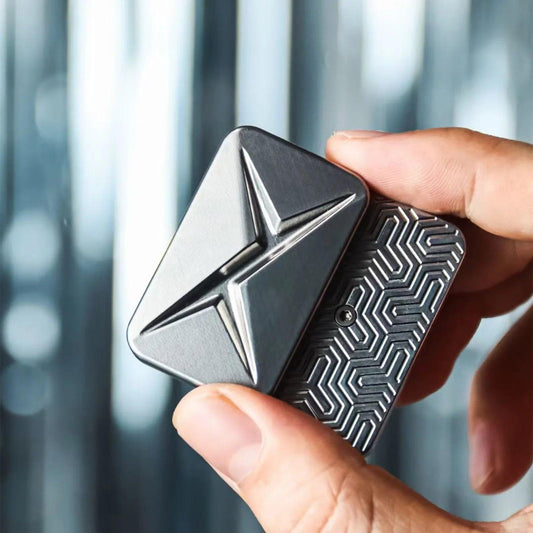
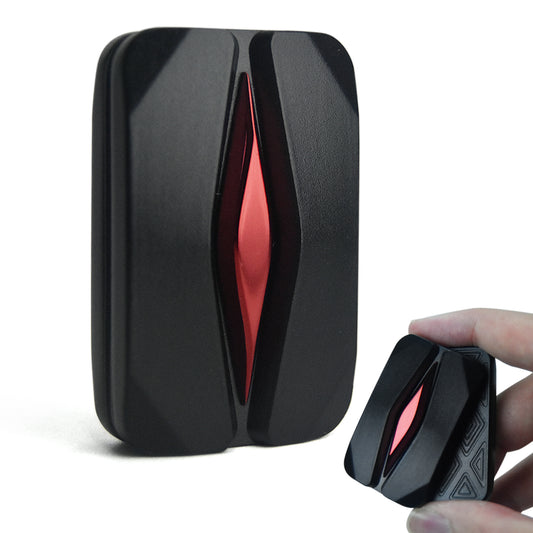
The trackless fidget slider is the format that confused everyone when it first appeared. No track, no guide, no fixed path — the inner piece just slides freely between two faces of the metal body, captured by magnets. The format rewards a kind of focused, two-handed fidgeting that the magnetic slider doesn't. This guide walks through how it works, who it's actually for, who should skip it, and how it stacks against the magnetic and mechanical slider formats.
The Short Version
A trackless slider is a metal body with a captured inner piece held in place by magnets. There's no track, no rail, no guide channel — the inner piece slides freely in any direction. The format is best for people who want a fidget that rewards tricks and two-handed play. It's not for the office, not for travel, not for focus work — the visual pull and the trick requirement make it a private-room format. The KOMO EDC Mountain slider is the flagship example.
What "Trackless" Actually Means
The traditional slider has a fixed path — the inner piece slides along a metal rail or a notched channel, and the click happens when it hits a stop. The track is what makes the click predictable and repeatable. The trackless slider has no such path. The inner piece is held in place only by magnets — it can slide, flip, rotate, or balance in any direction the magnets and gravity allow.
Three things fall out of this design.
The slide is silent or nearly silent. Without a track or a click stop, there's no metallic click. The trackless slider has a soft "thud" when the magnets engage, but it's not a click in the slider sense. The format is closer to silent than clicky.
The inner piece can do tricks. With a track, the inner piece is constrained. Without one, it can spin on edge, flip end over end, balance on a corner, or stop mid-slide. The tricks are part of the format's appeal — the trackless is a skill toy in a way the magnetic slider isn't.
The format demands focus. To do the tricks cleanly, you have to be looking at the slider. The magnetic slider can be fidgeted one-handed while reading; the trackless can't.
The Mechanism, in Plain Terms
The trackless slider has three parts: the body (a flat or curved metal frame), the inner piece (a smaller metal puck or plate), and the magnets (neodymium, captured inside the body).
The magnets attract the inner piece to one face or the other of the body. When you push the inner piece, it slides freely across the face. The magnets keep it from falling off. When you stop pushing, the magnets pull the inner piece to the nearest edge or face and hold it there.
Compared to the magnetic slider (clicks along a track), the trackless has more freedom. Compared to the mechanical slider (fixed detent), the trackless has no detent at all.
Who the Trackless Slider Is For
The trackless is a niche format within a niche format. It's not for everyone. Three audiences actually enjoy it.
Skill-toy people, visual fidgeters, and collectors. The trackless rewards practice (closer to a cardistry deck than an office fidget), the inner piece in motion is satisfying to watch, and well-machined versions like the Mountain slider are display-worthy. The format has a niche but loyal audience.
If you're not in those groups, the magnetic slider is probably a better pick.
Who Should Skip the Trackless
Office, travel, focus, calls. The visual pull, the two-handed requirement, the turbulence risk, and the on-video visual make the trackless the wrong pick for all four. The magnetic slider does 80% of what you want at 20% of the visual cost in shared spaces.
Basic Tricks to Start
If you're new to the trackless, three tricks to learn first. They're the foundation; advanced tricks build on them.
The basic slide — push the inner piece end to end. Most beginners do it within the first minute.
The flip — push past the magnetic edge so the inner piece flips end over end. Takes practice (right amount of force).
The spin — push so it spins on edge along the magnetic face. Harder than the flip; most people master it within a week.
Trackless vs. Magnetic vs. Mechanical
Trackless: Most freedom, most visual, no click. Best for skill-toy play. Worst for shared spaces. The format is a performance, not a fidget.
Magnetic slider: Fixed path, one click, repeatable. Best for everyday carry and office work. The format is a tool, not a toy. The KOMO EDC Gold Ace is the flagship magnetic slider — it covers 80% of everyday use cases.
Mechanical slider: Fixed path with mechanical detent (a small notch that holds the inner piece in place until you push). More click feedback than the magnetic, more resistance than the trackless. Best for people who want a stronger click and a heavier hand feel.
How the Finish Ages
The trackless has the same finish options as the magnetic slider — black electroplate hides scratches, raw brass develops patina, anodized aluminum holds color. The difference: the inner piece has more contact with the body (slides freely, no track), so corners round off and the surface polishes the longer you carry it. Natural aging, not a defect.
The care guide covers how to maintain the finish — microfiber cloth, no abrasives, no chemical cleaners.
Common Beginner Mistakes
Pushing too hard. The right amount of force is just enough to clear the magnetic edge — too hard sends the inner piece off the frame.
Trying tricks without the basics. Learn the basic slide first, then the flip, then the spin.
The short version: the trackless is a format you either love or you don't. If you don't love it, the magnetic slider is a better pick. If you do love it, the KOMO EDC Mountain slider is the one to start with.
FAQ
What is a trackless fidget slider?
A metal slider with a captured inner piece held by magnets, no fixed track. The inner piece slides freely in any direction the magnets allow.
How is it different from a magnetic slider?
The magnetic slider has a fixed path along a rail with a click. The trackless has no track and no click — closer to silent than clicky.
Are trackless sliders good for focus?
No. The trackless is a visual fidget that demands attention. For focus work, the haptic coin or a quiet magnetic slider is the better pick.
Pick the Format That Matches the Use
The trackless is a niche format with a clear audience: skill-toy people, visual fidgeters, and collectors. If you're not in those groups, the magnetic slider is the better default — a tool, not a toy, that covers more use cases with less visual demand. The Mountain slider covers the trackless slot; the Featured Metal Fidget Toys collection shows all three slider formats side by side.