How to Clean and Care for Metal Fidget Toys (So They Last)
A quality metal fidget is built to last years, but only if you clean it the right way. Most damage to fidget toys comes from the wrong cloth, the wrong solvent, or the wrong habit. This guide walks through exactly how to clean a metal slider, spinner, or haptic coin, what to use, what to skip, and the small habits that keep the finish looking new.
What You Need
Five things: a microfiber cloth (the kind for glasses; won't scratch), a soft brush (old toothbrush works), mild dish soap (one drop, diluted), mineral oil (optional, monthly for magnetic tracks; skip on haptic coins), and a clean dry surface. Skip alcohol wipes, glass cleaner, brass polish, WD-40, or any cleaner not designed for precision metal.
Cleaning a Magnetic Slider
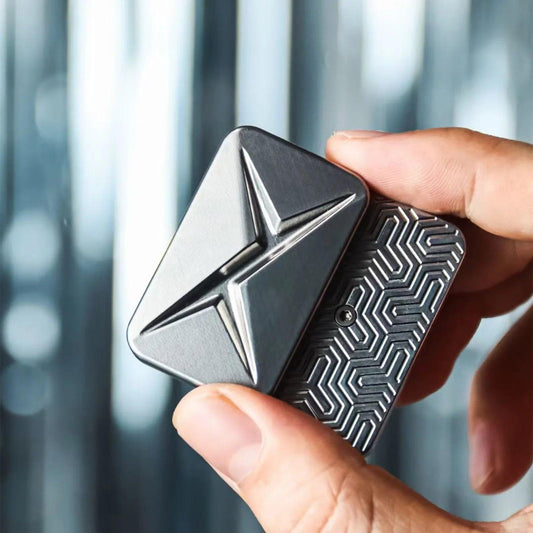
The most common format, every two to four weeks. Wipe the outside with a dry microfiber cloth (both sides, 30 seconds). Brush the seams with a soft brush along the gap between inner piece and frame. Slide-test: if it drags, go back to brushing. Spot-clean with a damp microfiber and a drop of dish soap, then a clean damp cloth to remove residue, then dry. Optional monthly oil: one drop of mineral oil on a cotton swab along the inside track; slide a few times, wipe excess. The slide feels noticeably smoother. Total time: 2 minutes.
Cleaning a Metal Spinner
Different from a slider because the bearing is the part that wears. Wipe the body with a microfiber cloth (both sides, around prongs and center cap). Brush the bearing area — don't try to open or remove the bearing; sealed bearings aren't serviceable from outside, and trying to clean inside usually does more harm than good. Spin-test: flick and time it; a clean spinner goes over a minute, a grime-bound one stops in 15-20 seconds. Don't blow into the bearing: breath introduces moisture that accelerates wear. A proper bearing clean is a service operation; if you don't know how, leave it or send it to the maker. Wipe the center cap and edges. Total time: 90 seconds.
How Often to Clean
Three rules: daily carriers every two weeks (lives in a pocket next to keys and coins; bi-weekly prevents the slow drag you'll notice at four weeks), occasional carriers monthly (a few times a week of use), and after exposure to wet or sticky (rain, sweat, food, soda) — wipe and dry as soon as you can.
How to Store a Fidget When You're Not Carrying It
Storage is half of cleaning. Use a small felt pouch (the single best accessory; a generic 3x3 inch bag works), keep it in a separate pocket from keys (#1 cause of finish damage), and at the desk use a small ceramic or wooden dish instead of a drawer with paper clips. Don't leave it in a hot car — heat weakens magnet strength over years.
Mistakes That Ruin a Fidget Finish
Five habits shorten a fidget's life, all easy to avoid. Alcohol wipes strip the factory finish and dull electroplating within weeks. Brass or metal polish is designed for raw unfinished brass; it strips the protective coating and exposes the underlying metal. Storing with keys — keys are harder than the finish; scratches accumulate. Household cleaners (Windex, Lysol, all-purpose sprays) leave residue and attack the finish. Soaking in water — even for a "deep clean," don't submerge; water takes hours to evaporate from the inner track, and rust on the magnets is permanent. Stick to a damp cloth.
What to Do When the Magnet Stops Clicking
If your magnetic slider's click has gone soft or silent, the cause is almost always grime in the track — not a dead magnet. Magnets don't wear out in years; they wear out in decades. The fix is the deep version of the clean routine above: a single drop of dish soap on a damp microfiber, run along the inside track, then a clean-water wipe and a mineral-oil finishing pass. If the click doesn't come back, the magnets may have shifted from a hard drop; in that case, contact the maker.
The magnetic sliders guide explains how the mechanism works if you want to understand what you're cleaning.
A Quick Note on Safety
Don't disassemble your fidget to clean it. Magnetic sliders have captured magnets that are hard to put back; spinners have sealed bearings that need a service press to remove properly; haptic coins are sealed shut. Keep all fidgets away from young children, especially during cleaning when small parts can be set down and forgotten. The right way to clean is from the outside, with a cloth and a brush.
FAQ
How do you clean a metal fidget toy?
Dry microfiber cloth for routine cleaning. A soft brush (toothbrush) for seams and around the inner piece. A drop of mild dish soap on a damp cloth for stubborn grime. Dry immediately. Never alcohol, never metal polish, never soak.
Can you wash a fidget toy with water?
You can wipe it with a damp cloth. Don't submerge it — water trapped in the inner track or under the bearing takes hours to evaporate and can cause rust on the magnets or the bearing surfaces.
How often should you clean a fidget toy?
Every two weeks for daily carriers, monthly for occasional ones. Wipe immediately after any exposure to liquids.
Can you use rubbing alcohol to clean a fidget?
No. Alcohol strips the factory finish and dulls electroplating. Use water and a drop of dish soap instead.
Keep It Clean
The Featured Metal Fidget Toys collection covers the formats worth maintaining; the poker-card slider collection is the most common; the Gold Ace is a good example of a finish that ages well.