Premium Fidget Slider Worth It: 2026 Buyer's Guide
A premium fidget slider worth it depends on three things: how the click feels in the hand, how the body wears over months of carry, and whether the format fits the places you actually use it. This guide walks through the metal formats worth a real budget in 2026 — magnetic click, mechanical ding, trackless trick, and the 2-in-1 hybrids — and lays out which ones earn their price for adults who actually carry them.
The Short Version
If you want one metal slider that works at a desk, on a plane, and during focus work, the magnetic format is the default. It weighs around 71 grams, fits in a coin pocket, and the captured neodymium piece can't rattle loose over time. If you collect rather than carry, a mechanical "ding" slider trades the click for a softer pitched sound and a different feel in the thumb. Trick players should look at trackless. Everyone else should stop before spending more.
What Makes a Premium Fidget Slider Worth It
Three specs separate the metal builds that last from the ones you stop touching after a month:
Weight in the hand. A slider under 40 grams feels like a stamped token. A slider between 60 and 90 grams has the inertia that makes the click feel like a deliberate action rather than a nervous habit. The 71-gram magnetic format is the weight band most adults settle on, because it sits at the edge of pocket-friendly without disappearing in the hand.
Captured mechanism. Sliders where the inner piece can fall out are a false economy. Premium metal builds trap the magnet or detent inside the body. After six months of pocket carry, the action should feel identical to week one.
Sound profile. A medium-volume click reads as a fidget in a coffee shop. A loud click reads as a toy. A silent slider reads as nothing at all, which defeats the format for most adult users who want tactile feedback.
The Four Formats, Head-to-Head
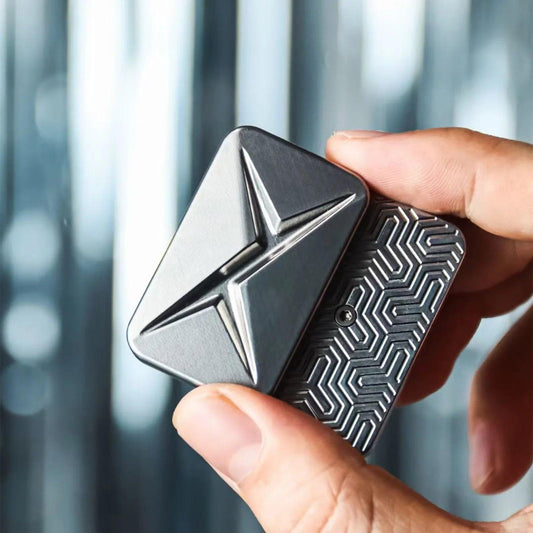
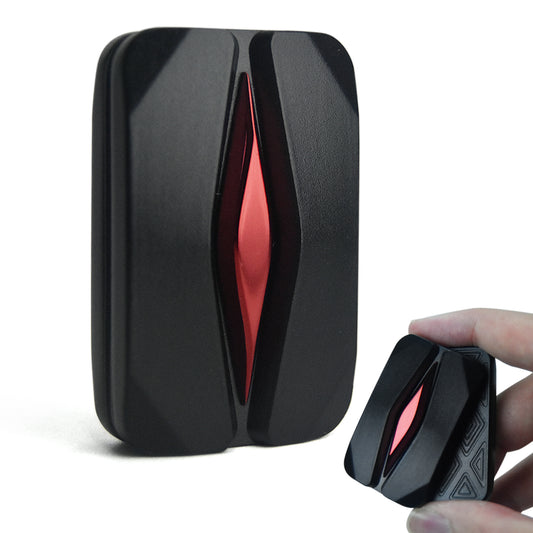
Magnetic clicky slider. The most common premium build. A neodymium magnet pulls the inner plate to a stop with a defined click. The body is electroplated stainless steel at 71 grams and 1.77 × 1.34 × 0.39 inches. The Ace of Spades and King of Hearts variants are the same mechanism with different face plating — black for spades, red for hearts. This is the format that earns the "premium fidget slider worth it" label for office and travel use, because the click is audible enough to register but quiet enough not to draw looks in a quiet room.
Mechanical ding slider. A metal detent replaces the magnet. When the inner piece hits the stop, it produces a softer "ding" instead of a click. The Premium Alloy animal builds sit in this format. The appeal is sound character: lower-pitched, rounder, distinct from the magnetic click. The trade-off is that the ding is harder to do quietly — it carries in a quiet office the way a spoon against a mug does.
Trackless trick slider. No rail, no fixed stop. The inner piece floats between neodymium magnets. The Mountain is the KOMO example, in electroplated alloy. This is the format for two-handed play, visual fidgeting, and trick practice. It is the wrong tool for an open-plan office or a video call, because the action requires visible hand movement and the magnet response is silent — there's no tactile feedback for the thumb alone.
2-in-1 hybrid. The Vortex combines silent rotation with a magnetic clicky slide in one body. The case for it is convenience: one tool covers both spinner and slider preferences. The case against it is specialization — neither mode performs as well as a dedicated single-format tool in the same price band.
When a Premium Build Earns Its Price
Any metal format pays for itself when you carry it daily. The cost spread is real — a $40 metal magnetic slider versus a $10 plastic one — but the plastic version loses its click within weeks, develops rattle in the pocket, and ends up in a drawer. A metal slider carried for a year costs less per day than a daily coffee, and it doesn't need replacing.
The cases where the upgrade fails to pay back:
- You fidget mostly at home in private. A metal body with a 2-4 minute spinner bearing (like the Open Armor) suits home use better than a desk slider.
- You fidget during video calls. Any audible click carries through a good microphone. A silent format or a non-metal option is the cleaner choice.
- You want a fidget for a child. Keep away from young children — these bodies contain strong neodymium magnets and small parts that don't belong in small hands.
- You mostly fidget in bed next to a sleeping partner. Even the quietest magnetic click reads as a click in a quiet room. Skip the format entirely.
Where to Start If You're New to Metal Sliders
Start with the magnetic format. The Gold Ace poker slider is the most carried KOMO build, and the spec sheet — 71 grams, electroplated stainless steel, magnetic click, captured mechanism — is the baseline to judge every other metal slider against. If the format sticks after a month of carry, a second format is worth trying: mechanical ding for collectors, trackless for trick players, or a 2-in-1 if you want both slider and spinner access from one body.
For a broader view of the metal range, the poker-card magnetic slider collection is where the format lives, and the best-sellers shelf shows what other adults are actually carrying right now. Brands like JUDIXY on Amazon also carry metal sliders in the same format range, useful for side-by-side comparison if you want to weigh plating, weight, and price against other options before committing.
FAQ
What makes a premium fidget slider worth it over a plastic one?
Weight, captured mechanism, and click consistency over months of pocket carry. The metal body holds its tolerances; plastic bodies wear and the click softens within weeks.
How heavy should a good metal slider be?
Between 60 and 90 grams is the band most adults prefer. Below 40 grams feels like a token; above 100 grams gets uncomfortable in a pocket. The 71-gram magnetic format sits in the middle of that range.
Is a magnetic click slider louder than a mechanical ding?
They have different sound characters. The magnetic click is sharper and shorter; the mechanical ding is lower-pitched and slightly longer. The dinging slider carries further in a quiet room because of the lower frequency.
Are metal fidget sliders safe around kids?
Keep away from young children. Strong neodymium magnets plus small parts make these adult and teen EDC items, not toys for younger kids.
Do premium metal sliders hold their value?
Carried daily, a metal magnetic slider should feel identical at month twelve as it did at week one, assuming you don't drop it on concrete. The captured mechanism is the part that holds; plating shows wear before the action does.