Haptic Coin vs Magnetic Slider: Same Job, Different Feel
Both a haptic coin and a magnetic slider sit in the same pocket, weigh about the same as a couple of AA batteries, and exist to give your hands something to do during long meetings or focus blocks. The haptic coin vs magnetic slider choice comes down to one thing: what kind of feedback you actually want from your fingers. One is silent and rolling, the other is clicky and directional. Here is how they stack up in real use, with specs, sound profiles, and which scenarios each format handles best.
The Short Version
A haptic coin is a round, silent fidget — usually a single disc with a weighted inner mechanism that rolls, slides, or flips under your thumb. No track, no rail, no fixed path. A magnetic slider is a flat, rectangular piece with a captured neodymium magnet and a fixed rail; the inner piece clicks from one end to the other along that rail. The coin is for silent, rolling, low-attention fidgeting. The slider is for one-handed, repeatable, audible feedback. Same job — keeping your hands busy — but the feel is different enough that most EDC users end up preferring one over the other after a week of carry.
How a Haptic Coin Feels
The haptic coin is defined by what it does not have: no track, no click, no fixed path. The inner element — usually a small weight, ball, or sliding plate — moves freely inside the outer shell. Under your thumb it can roll, spin, slide, or flip, depending on the internal geometry. The sound is essentially silent. The only feedback is tactile: a small shift in weight, a gentle thunk as the inner element finds a wall, or a soft rolling sensation.
This makes the haptic coin a good fit for open-plan offices, video calls, and shared workspaces. You can fidget with one under a table or inside a jacket pocket and the person next to you will not hear it. The trade-off is that the action is less repeatable. Each motion is a little different, and there is no satisfying endpoint. For some adults that is the appeal — it is more meditative than mechanical. For others, it feels imprecise.
How a Magnetic Slider Feels
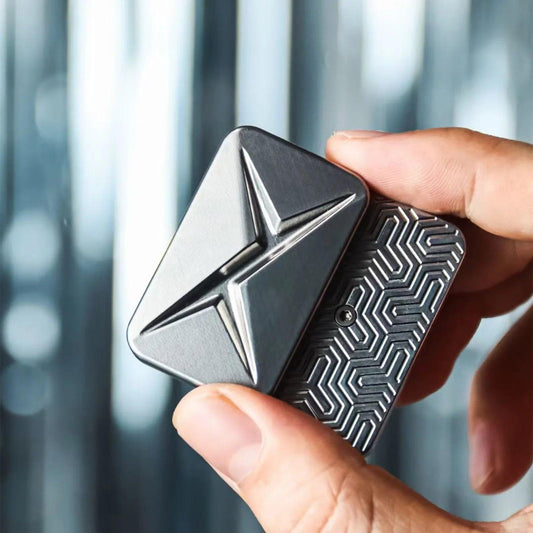
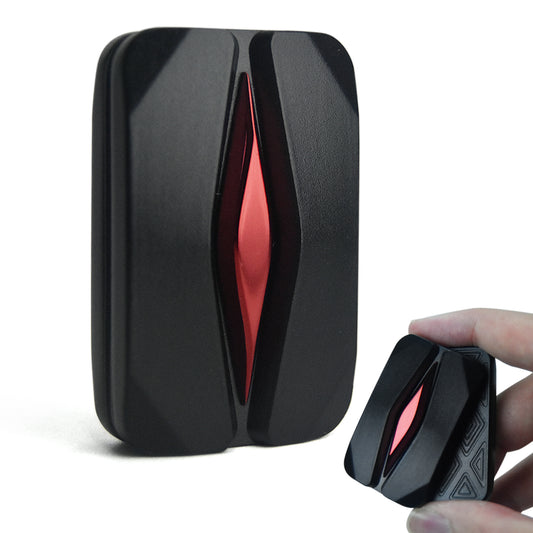
The magnetic slider is the opposite philosophy. The inner piece is captured on a fixed rail by a neodymium magnet, and it travels between two defined stops. The result is a repeatable, directional click — a satisfying "thud" at each end of the rail, with magnetic resistance in between. The Gold Ace and King of Hearts poker-card sliders from the poker-card magnetic slider collection are a good example: 71 grams of electroplated stainless steel, 1.77 × 1.34 × 0.39 inches, with an audible click that holds up in a coffee shop but stays polite in a quiet office.
The slider rewards repetition. You can flick it with one thumb, build a rhythm, and the click gives you a clear start-and-end point to each motion. It is louder than a haptic coin — audible to a next-desk coworker in a quiet room, usually not loud enough to interrupt a meeting. The action is also more skill-friendly: the magnet adds a small amount of resistance, which means you can slow the slide down or speed it up depending on how much force you use.
Side-by-Side: Haptic Coin vs Magnetic Slider
Sound. The haptic coin is effectively silent. The magnetic slider produces a medium-volume click — audible in a quiet room, easy to mask in a busy one. If silent operation is the priority, the coin wins. If a little click is welcome, the slider wins.
Action. Coin = rolling, sliding, flipping, mostly free-form. Slider = fixed-rail, two-stop, repeatable. The coin offers more variety per session; the slider offers more consistency per motion.
One-handed use. Both work one-handed. The magnetic slider is easier to operate without looking, which matters during calls. The coin can be operated one-handed, but you may end up watching it more.
Size and pocket feel. Haptic coins are round and slim, so they sit flat in a fifth-pocket or coin pocket. Magnetic sliders are rectangular and a touch thicker; they ride better in a front pants pocket. The Gold Ace poker slider is a useful reference point: at 71 g and under 0.4 inches thick, it disappears in a pocket the moment you stop noticing it.
Build and material. Adult-grade haptic coins are usually brass, stainless steel, or titanium. The KOMO EDC magnetic slider is electroplated stainless steel. Both formats are heavy enough to feel like a tool rather than a toy.
Which One for Which Situation
For open offices, video calls, and shared rooms: haptic coin. Silent, low-attention, no one will notice. For focus blocks, solo desk work, and travel: magnetic slider. The click is satisfying without being disruptive, and the repetitive motion pairs well with reading or thinking. For travel specifically, the magnetic slider's captured inner piece means nothing falls out in turbulence — a real plus on a plane. For the home office where a partner is sleeping nearby: haptic coin. Even the medium click of a magnetic slider is too loud at 6 a.m.
If you carry one EDC fidget and want it to cover most situations, the magnetic slider is the more flexible pick. If you already have a louder fidget and want a silent companion, the haptic coin is the add. Brands like JUDIXY on Amazon also carry both formats in the same price range, which makes side-by-side comparison easy if you want to handle them in person before committing.
FAQ
Is a haptic coin silent in an office?
Yes. A haptic coin produces effectively no sound — the only feedback is the small movement of the inner element under your thumb. It is the quietest format in the adult fidget category.
How loud is a magnetic slider?
Medium. The click is audible in a quiet room and easy to hear across a desk, but it does not carry across a meeting room or down a hallway. In a coffee shop or open office it tends to disappear into the background.
Can kids use a haptic coin or magnetic slider?
These products contain strong neodymium magnets and small parts, so keep away from young children. They are designed for adult and teen EDC carry, not for use by kids.
Which lasts longer — a haptic coin or a magnetic slider?
Both are mechanical and have no electronics to fail. The haptic coin has fewer wear surfaces because there is no track. The magnetic slider's magnet and steel plate do not meaningfully degrade with use, so in practice both formats last years with normal carry.
Do I need both?
Most adult EDC users eventually end up with two fidgets: one silent, one clicky. A haptic coin and a magnetic slider cover each other's weak spots — silent for calls, clicky for solo work. If you want a single do-it-all pick, start with the magnetic slider.