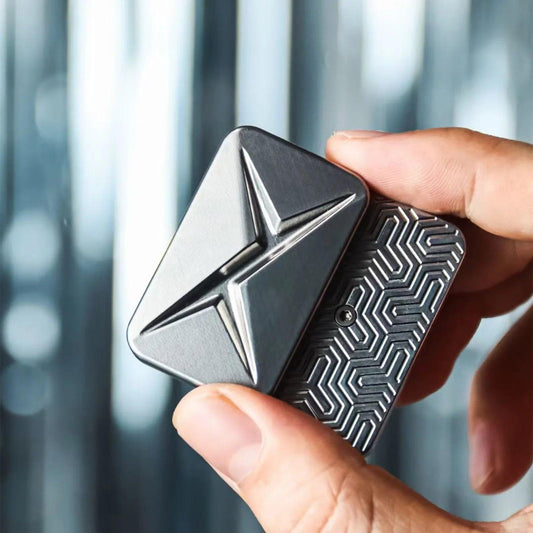
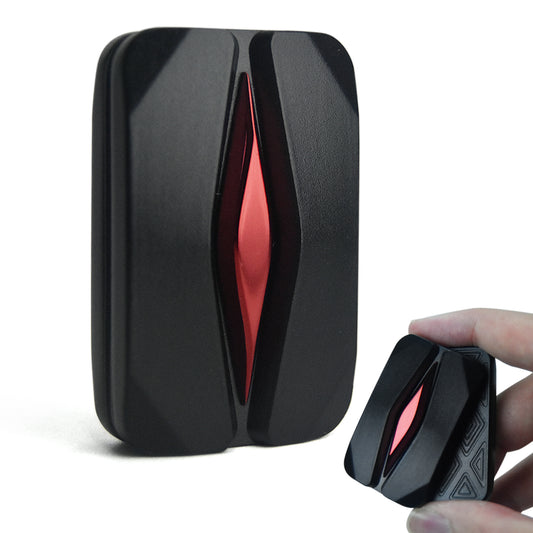
Trackless vs Magnetic vs Mechanical Slider: 2026 Buyer's Map
Choosing a metal slider used to mean picking a color. In 2026, the meaningful decision is the mechanism — trackless vs magnetic vs mechanical slider. These three formats look similar in the hand, but they sound, move, and behave very differently. This guide maps the differences so you can pick the format that actually fits your day, not the one with the best photo.
The Short Version: What an trackless vs magnetic vs mechanical slider Actually Means
Magnetic sliders click into fixed stops and ride a captured rail — predictable, audible, and the format most adults should default to. Mechanical sliders use a metal detent that produces a soft "ding" instead of a magnet — a different sound signature for collectors and click-lovers. Trackless sliders have no rail at all; the inner piece floats between magnets and is built for trick play, not for one-handed desk use. Each format has a job. The job is not the same job.
Magnetic Sliders: The Default Format
A magnetic slider is a flat metal body with a captured inner piece that snaps between two stops via neodymium magnets. The motion is linear, repeatable, and ends with a defined click. The poker-card sliders — Gold Ace (black, spades) and King of Hearts (red, hearts) — are the reference design: 71 g, 1.77 × 1.34 × 0.39 in, electroplated stainless steel, audible click that registers at a coffee shop and at the next desk in a quiet office.
The weight does real work here. At 71 g the slider feels like a tool, not a coin — the mass gives the click a satisfying thud rather than a tinny snap. One-handed operation is reliable because the rail constrains motion; you cannot drop the inner piece, and the piece cannot escape the body during travel. For office use, focus work, and travel, magnetic is the format that gets out of the way.
Where it loses: heavy turbulence (the piece can drift mid-cycle), a sleeping partner on the next pillow, and any user who wants a quieter sound than a clear click.
Mechanical Sliders: The "Ding" Format
A mechanical slider replaces the magnet with a metal-on-metal detent. The Premium Alloy animal sliders sit in this category — alloy body, captured inner piece, no magnet. The end-stop produces a lower-pitched "ding" rather than a click. Sound profile is the entire reason to pick this format.
Mechanism-wise, you give up the crisp snap of a magnet for a warmer, rounder tone. Some adults find the ding more pleasant at close range; others find it less defined. Weight, size, and feel depend on the specific body — the Premium Alloy animal line is shaped for visual variety rather than uniform pocket feel, so the hand-test matters more here than with the poker-card magnetic format.
This format is not silent, and it is not magnetic. If you want true silence, you want a haptic coin or a 2-in-1 spinner mode — not a mechanical slider. For collectors, for users who already own a magnetic and want a different sound, and for anyone who finds the magnet click too sharp, mechanical is the second slider worth owning.
Trackless Sliders: The Trick Format
The trackless vs magnetic vs mechanical slider conversation changes shape the moment a trackless design enters the room. A trackless slider — the Mountain is the example — has no fixed rail. The inner piece floats between neodymium magnets, captured but unguided. You can flip it, pivot it, and chain tricks that a railed slider physically cannot do.
This is a two-handed fidget. The play is exploratory, not repetitive, and it rewards practice. Sound is essentially silent — the magnets hold the piece, but there is no end-stop click to make. That silence is the point: the Mountain is built for trick sessions at home, on a couch, or at a desk during a long video call where visual fidgeting would be inappropriate but you still want something in the hand.
Where it loses: office one-handed fidgeting (no rail = less repeatable), turbulence (the floating piece drifts), and focus work where the click of a magnetic slider actually helps you mark a thought. Trackless is a specialist format, not a default.
Head-to-Head: Which Format Wins Which Job
Office and travel → magnetic. The rail, the click, the weight, the predictability. The Gold Ace poker slider is the reference point for this category.
Collection and variety → mechanical. Different sound, different shapes, different alloy feel. Best as a second slider.
Trick practice and silent play → trackless. Two hands, no rail, near-silent. A format with a learning curve, not a default carry.
JUDIXY on Amazon also carries metal sliders in the same format range, useful for side-by-side comparison if you want to see how weight and detent design vary between makers.
FAQ
Is a magnetic slider louder than a mechanical slider?
Yes. The magnetic click is sharper and slightly higher-pitched. The mechanical "ding" is softer and lower. Both are audible in a quiet room; neither is appropriate next to a sleeping partner.
Can a trackless slider replace a magnetic one for office use?
Not cleanly. Trackless play is two-handed and exploratory; magnetic play is one-handed and repeatable. They cover different jobs.
Which format is best for travel?
Magnetic. The captured rail prevents drift on turbulence, and the click gives a clear endpoint. Avoid trackless in pockets during flights.
Are these safe around kids?
Keep away from young children. The neodymium magnets and small parts are a hazard if swallowed or inhaled.
What if I want both a slider and a spinner?
Look at a 2-in-1 like the Vortex — silent rotation mode plus a magnetic clicky slide in one body.
Pick the Format, Then the Body
Start with the mechanism. Magnetic for default carry, mechanical for sound variety, trackless for trick play. Once the format is set, the body — weight, finish, suit or shape — is the second decision, not the first. Browse the Featured Metal Fidget Toys collection to see which formats the format-comparison crowd actually lands on, and pick from there.