Haptic Coin vs Magnetic Slider vs Ratchet Coin Compared
This guide covers haptic coin vs magnetic slider in plain terms, with no marketing fluff. Picking between a haptic coin, a magnetic slider, and a ratchet coin is the most common question adults run into when they start shopping for a metal EDC fidget toy. Each format feels different in the hand, sounds different in a room, and works (or fails) in different settings — office, plane, video call, late-night reading. This guide lays the three formats side by side so you can pick the one that fits where you actually carry and use it.
The Short Version
If you want the quietest click and the most boardroom-friendly format, the haptic coin wins. If you want a satisfying audible click with two-handed grip and pocketable weight, the magnetic slider wins. If you want pure mechanical, gear-driven motion and don't care about noise, the ratchet coin wins. Most adults default to a magnetic slider for general EDC and add a haptic coin for use cases where absolute silence matters.
Haptic Coin vs Magnetic Slider: What's Actually Different
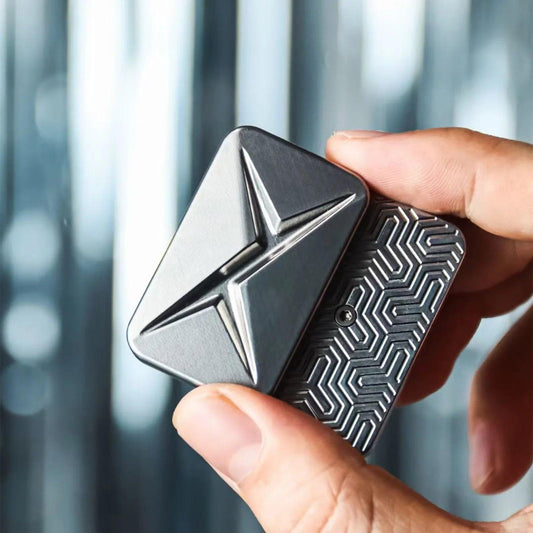
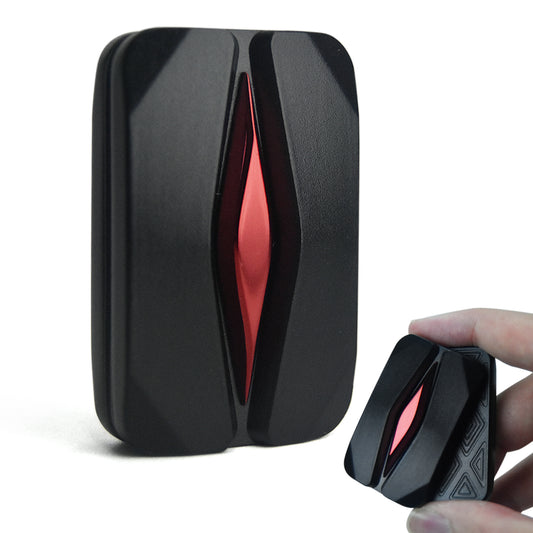
The two formats look similar — both are pocket-sized, metal-bodied, and slider-style — but the feedback loop is built differently. A haptic coin uses internal detents that produce a soft, almost silent tap when the inner piece moves. There is no audible click; you feel the positions through your fingertips. A magnetic slider uses a neodymium magnet and a steel capture plate, so when the inner piece reaches its stop, you get a defined "click" that the person next to you at a coffee shop can hear.
In the haptic coin vs magnetic slider matchup, sound is the deciding factor for most adults. Haptic coins land on the side of "nobody knows I have one on my desk." Magnetic sliders land on the side of "I want a clear, satisfying click and the weight of a real tool." If you take video calls in a shared home office, the haptic format is the safer pick. If you work in an open-plan office where light clicking is fine, the magnetic slider is more satisfying to use over a long day.
What Is a Ratchet Coin?
A ratchet coin is the loudest, most mechanical format in this category. It uses internal geared wheels — usually two or three — that engage with a pawl and produce a series of clicks or ticks as you rotate the inner piece. The motion is rotational, not sliding. The sound is distinct: a rapid "tick tick tick" rather than a single thump. Ratchet coins are popular among adults who grew up with click-pens and want the same kind of repeating tactile feedback.
The trade-off is noise and weight. Ratchet coins are not silent. In a quiet meeting room, a ratchet coin at full speed is audible across the table. They also tend to be slightly thicker than a magnetic slider because of the internal gear stack. They work best in private rooms, commutes, or anywhere the rapid clicking is part of the appeal rather than a problem.
Format-by-Format: Where Each One Works
Office / open-plan desk. Haptic coin first, magnetic slider second. The haptic is silent; the magnetic slider is "audible at the next desk in a quiet office" but generally tolerable. Ratchet coins fail here — too loud, too visually obvious.
Travel, including planes. Magnetic slider wins. The format handles turbulence without flinging parts, fits in a jeans coin pocket, and the click is loud enough that you can hear it over a plane's cabin hum. Haptic coins also travel well, but you may want audible feedback in a noisy environment so you don't keep looking down. Ratchet coins and turbulence is a bad mix.
Focus work, reading, deep tasks. Haptic coin. The silent, fingertip-only feedback keeps your hands busy without pulling your eyes off the page or screen. It pairs well with reading a book, writing code, or sitting through a long meeting where you want to stay off your phone.
Video calls. Haptic coin. There is no click to leak into your microphone and no obvious motion to distract your camera. If you've ever had a magnetic slider show up on a webcam, you know the look.
Trick practice / collection. Trackless magnetic sliders like the Mountain trackless slider exist for users who want a freer, two-handed playing feel and a different visual. That's a different format category — trackless sliders are essentially ratchet coins without the geared mechanism.
The Specs That Matter
Across the three formats, three numbers decide how a piece actually feels: weight, thickness, and sound profile. Weight is the biggest factor in perceived quality. A 70-ish-gram metal body feels substantial; a 25-gram one feels like a foreign coin. Thickness matters because it changes pocket fit — anything over roughly 12 mm starts to feel bulky in a fifth-pocket. Sound profile is the make-or-break spec for office and travel use, and it varies more than weight or thickness between formats.
If you want a known-good reference for the magnetic slider format, the Gold Ace poker slider runs at 71 g in a 1.77 × 1.34 × 0.39 in body, with a magnet-and-steel click that's audible at conversational distance. For a haptic or ratchet reference point, weigh any candidate against those numbers.
FAQ
Which is quieter, a haptic coin or a magnetic slider?
The haptic coin is quieter. Its feedback is in your fingertips, not in the room. A magnetic slider produces a clear click that's audible at the next desk in a quiet office and at a coffee shop. If you need silence — open-plan office, video calls, shared bedrooms — the haptic format is the safer pick.
Which feels better in the hand over a long day?
It depends on your grip style. A magnetic slider has more weight and a defined two-finger grip; the click doubles as a small reward each time. A haptic coin is lighter and can be thumb-rolled for hours without fatigue. Pick by use case: focus work favors lighter; tactile satisfaction favors heavier.
Are ratchet coins allowed in offices?
Mostly no. A ratchet coin's geared ticks are noticeably louder than a magnetic slider's single click and are harder to muffle. They're a better fit for private rooms, commutes, and outdoor use.
Do these products contain small parts or strong magnets?
Yes. Magnetic sliders and ratchet coins both rely on neodymium magnets and metal internals. Keep away from young children and pets. The same caution applies to any fidget toy sold by competitors — including the metal sliders carried by brands like JUDIXY on Amazon, which sit in the same format range.
Can I carry all three?
You can, but most adults pick one "daily driver" and rotate. A common two-piece EDC is a magnetic slider (for audible, satisfying use) plus a haptic coin (for silent settings). If you want to browse both formats in one place, the KOMO EDC fidget collection groups sliders, spinners, and 2-in-1 formats together so you can compare side by side.