Can You Fly With Fidget Toys? Carry-On, Checked, and Security
If you're asking can you fly with fidget toys, the short answer is yes for most metal EDC formats. The longer answer depends on which format you carry, where it sits in your bag, and one detail about strong magnets that catches some travelers off guard. This guide walks through the rules that actually matter at the checkpoint, the formats that draw a second look, and the packing habits that keep your fidget accessible on the plane without triggering a bag search.
The TSA rule that decides everything
The TSA's published guidance treats fidget toys the same way it treats most small personal items. A handheld metal slider, a trackless trick slider, a mechanical "ding" slider, and a small metal spinner are all allowed in carry-on bags. None of these formats are restricted like a knife, a taser, or a full-size multitool, and none fall under the liquids rule. The screener is looking for shapes that resemble weapons or sharp edges, not the function of the object itself.
Where travelers run into trouble is the magnet. A small neodymium magnet inside a magnetic slider is fine. A loose, exposed, or unusually strong magnet can draw extra attention because aviation security screens magnets for a reason: strong magnets can interfere with aircraft instruments if mishandled. The slider's captured neodymium magnet, recessed inside a stainless steel body, sits well under any threshold that would concern a screener. The key word is captured. As long as the magnet is sealed inside the housing, it is treated as part of the device.
Format-by-format: which fidget passes, which draws questions
Format matters more than material at the checkpoint. Here is how each metal EDC format typically fares.
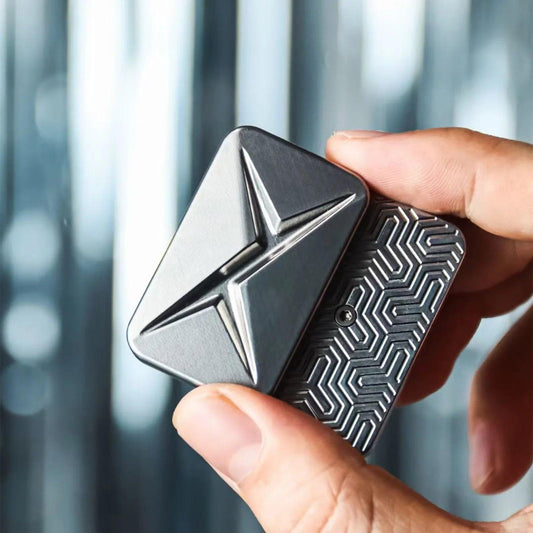
Magnetic poker-card slider (Gold Ace, King of Hearts, 71 g). This is the easiest carry-on format. The body is a flat stainless steel card with a captured magnet. It looks like a thick metal card holder on the x-ray and clears in seconds. If you carry it in your pocket through the body scanner, expect to be asked about it occasionally. The cleanest move is to leave it in your bag in a clear pocket or accessible compartment so the bag check is faster.
Mechanical "ding" slider (Premium Alloy animal shapes). No magnets, no moving parts that read as mechanical hazards. These are the quietest travelers through security. The alloy body and small detent do not flag on x-ray.
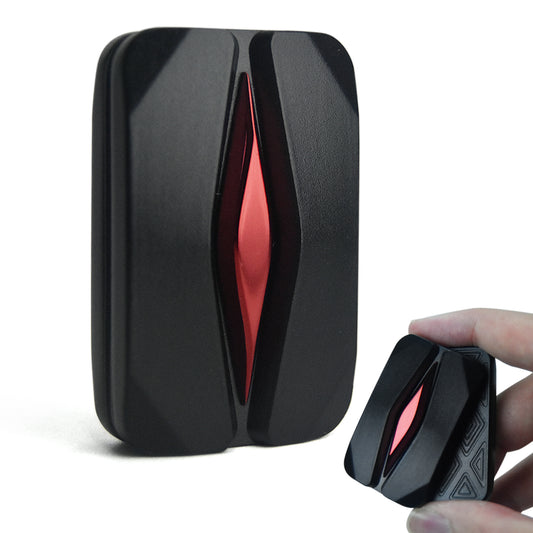
2-in-1 fidget (Vortex). Two mechanisms in one body, both sealed. Same treatment as the magnetic slider from a screening standpoint.
Trackless trick slider (Mountain). This is the format that draws the most questions. The free-sliding inner piece moves visibly when the bag is tilted, and the captured magnet still reads as a small magnetic source on x-ray. None of this is a problem, but expect the bag to take an extra ten seconds while a screener confirms the shape is a slider and not something else.
Metal spinner (Open Armor). The bearing can spin freely inside the housing, which looks unusual on x-ray but is not restricted. Same handling as the trackless: an extra moment, no escalation.
If you want the smoothest path through the checkpoint, a poker-card magnetic slider in your bag's outer pocket is the closest thing to a guaranteed clean scan.
Carry-on versus checked: where the fidget actually belongs
For most travelers, carry-on is the right call. You have access to it during the flight, you can fidget during takeoff and landing when you most need something to do with your hands, and you avoid the risk of a checked bag's contents getting jostled hard enough to damage a delicate bearing or scratch a polished face.
Checked bags are fine for any of these formats. The TSA does not restrict any of them. The reason to check a fidget instead of carrying it on is mostly about reducing the items you have to manage at the checkpoint, which matters if you're flying with a laptop, a tablet, and a quart-size liquids bag and want fewer things in the trays.
If you do check one, slip it into a soft pouch so the polished face does not get scratched by other items in the suitcase. The Gold Ace and King of Hearts both have an electroplated finish that holds up to daily carry but not to a month of friction against keys and chargers in a packed suitcase.
The one thing that can actually stop you at the checkpoint
The single most common reason a fidget-related item gets pulled aside is not the fidget itself. It is a second item in the same bag that confuses the x-ray picture. A metal slider plus a chunky metal pen plus a multi-tool blade looks like a single dense object on the scanner, and the screener has to open the bag to identify each piece. The fix is straightforward: keep the fidget in an outer pocket where it sits alone, or in a clear pouch so it is visually distinct from anything else metal.
The other situation worth flagging is international flights. TSA rules apply to U.S. departures. Other countries screen differently, and a few post-9/11 security regimes are stricter about any object with a moving internal mechanism. If you're flying out of a country with stricter screening, the same rules apply in reverse: nothing in the KOMO lineup is restricted, but a screener in a high-security environment may take longer to clear it. Build a few extra minutes into your arrival time.
Can you fly with fidget toys on the plane itself?
Once you're past the checkpoint, the question becomes whether the fidget is appropriate to use in your seat. The sound a fidget makes matters more than its format here.
The magnetic slider's audible click is fine in most cabin noise. On a typical flight, the ambient sound of engines and air conditioning masks the click from anyone more than a row away. If you're in a premium cabin where the cabin is noticeably quieter, or you're in a window seat next to a sleeping passenger, switch to a silent format like the trackless slider for the duration of the flight. The trackless is silent by design and lets you fidget without thinking about the person beside you.
Spinners are a different story. The bearing hum on a metal spinner is audible in a quiet cabin and reads visually as fidgeting more than sliding does. Most flight attendants will not say anything, but you will notice the passenger next to you noticing. Save the spinner for the airport lounge, not the seat.
Packing habits that make the next flight smoother
Three small habits remove most of the friction from flying with a metal fidget.
FAQ
Is there an age rule for flying with a fidget?
TSA does not restrict by age, but the products contain strong neodymium magnets and small parts. Keep away from young children.
Which format to pack if you only bring one
For pure checkpoint ease, the magnetic poker-card slider is the cleanest carry. It is flat, light at 71 g, and reads instantly on x-ray as a card-shaped object. For in-flight courtesy, the trackless slider is the right call if your seatmate might be sleeping. If you want one fidget that covers both situations, the Vortex 2-in-1 lets you switch from silent rotation to the magnetic click without swapping devices. Browse the full EDC fidget lineup to pick the format that matches how you actually fly.