How to Carry Multiple Fidget Toys Without the Pocket Mess
Most adults who fidget seriously end up with two or three toys within a few months. A magnetic slider for the desk, a spinner for the couch, a trackless slider for the weekend. The problem isn't picking them. The problem is figuring out how to carry multiple fidget toys without your pocket turning into a noisy, scratched-up disaster. This guide covers the practical side of multi-toy carry: what pairs well, what fights each other, and how to keep your daily pocket load light.
Why a second (or third) fidget usually shows up: What an carry multiple fidget toys Actually Means
One fidget rarely covers every situation. A magnetic clicky slider is great in a coffee shop but gets old in a quiet home office. A spinner looks satisfying but pulls attention in meetings. A trackless slider is fun to practice with, but two-handed play means it isn't a one-handed desk companion. So you add another. Then another.
Once you've got two or three, the question stops being "which fidget" and becomes "how do I keep them organized." That's where most pocket setups fall apart.
The real cost of carrying more than one fidget toy
Two magnets rubbing against a phone screen is the most common carry mistake. Neodymium magnets can affect compass calibration, swipe responsiveness on phones with magnetic cases, and any cards with magnetic strips. If you intend to carry multiple fidget toys that use magnets, give them their own pocket.
Weight stacks faster than people expect. A single metal slider already feels substantial in a front pocket. Two or three turn that pocket into a noticeable lump, and the fabric wears through faster at the corner of the toy. Combined with a phone, keys, and a wallet, you start getting that "everything is on the left side" lean.
Sound is the other hidden cost. A magnetic slider that clicks plus a bearing-driven spinner that hums plus a mechanical slider that dings will announce you every time you stand up. If you need to carry multiple fidget toys into a quiet space, you'll need to choose formats that don't all make noise at once.
Pick formats that don't fight each other
The easiest rule for anyone learning how to carry multiple fidget toys without pocket noise is to mix sound profiles. Pair one clicky format with one silent format. A magnetic slider plus a trackless slider is a common-sense pairing because the magnetic one audibly clicks at each stop while the trackless one is two-handed and quiet when set down.
Pairing two clicky formats in the same pocket is what creates the rattle. Two magnetic sliders bouncing off each other mid-walk sounds like a couple of coins fighting. Two mechanical sliders with metal detents are slightly better but still chatty.
The pocket test before you commit: drop the two toys into an empty pocket, walk twenty steps, then sit down. If you hear anything besides fabric, change the pairing.
Pocket layout that actually works
Three pocket zones are usually enough for a multi-fidget carry. Front-right pocket for the primary fidget you reach for most. Front-left pocket for the phone (keep it away from magnets). Back pocket or a small coin pouch for the secondary fidget, wrapped in a microfiber pouch if you want to keep the finish clean.
A small zipper pouch solves more problems than most people expect. It keeps the magnetic toy from rubbing the spinner, stops the spinner bearing from collecting lint, and gives you a single thing to grab when you leave a room. This is also how people who carry multiple fidget toys at work avoid the "what's in your pocket" conversation.
If you'd rather not add a pouch, at minimum separate the toys by a single layer of fabric. A folded microfiber cloth works, or even a soft cotton handkerchief. The point is stopping metal-on-metal contact.
Two-format carry vs. three-format carry
Two is comfortable. Three is the practical ceiling for daily front-pocket carry unless you're wearing a jacket with larger pockets.
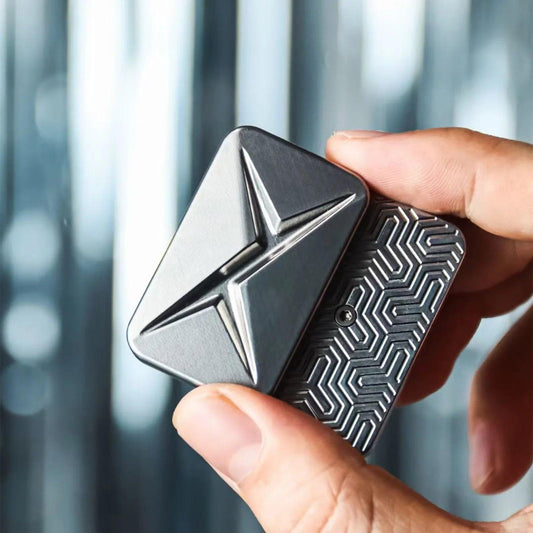
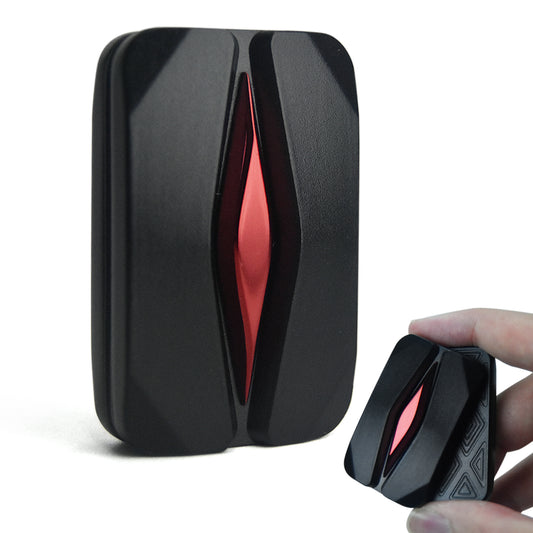
A typical two-format setup looks like a magnetic slider plus a silent format, or a mechanical slider plus a spinner. Three formats usually means you've added something specific: a trackless slider for trick practice, or a 2-in-1 that combines two play styles in a single body. The Vortex-style 2-in-1 toy is a popular answer to the "too many toys" problem because it compresses two formats into one weight and one footprint.
Browse the 2-in-1 fidget collection if you're tempted to consolidate. Two-format-factor toys often replace what would otherwise be a third single-format toy. Two-form-factor designs are also lighter in the pocket than carrying two full-size toys of different formats.
Pouch and sleeve options worth trying
Microfiber drawstring pouches are the cheapest upgrade for anyone learning to carry multiple fidget toys. They weigh almost nothing, fit in a back pocket, and protect the finish on electroplated steel sliders from keys.
Hard-shell EDC cases are heavier but solve the rattle problem completely. If you carry two magnetic sliders, a hard case with a divider is the only way to keep them silent in the same compartment.
Silicone sleeves are popular for spinners. They dampen the bearing hum and protect the finish. They don't help much with sliders, though, because the click action needs the metal pieces to move freely.
FAQ
How many fidget toys should I carry daily?
Two is the practical sweet spot. Three works in a jacket pocket or with a pouch. More than three usually means you're collecting, not carrying.
Will magnets in my pocket damage my phone?
Modern phones are largely shielded, but strong neodymium magnets can still affect compass calibration and magnetic-stripe cards. Keep magnetic fidget toys in a separate pocket from your phone and wallet.
What's the quietest multi-fidget setup?
A trackless slider plus a silent spinner, both wrapped in a microfiber pouch. No clicks, no hum, no metal-on-metal rattle when you walk.
Is it okay to give fidget toys to teens?
These products contain strong magnets and small parts. Keep away from young children. Teens can use them with the same care you'd apply to any pocket tool.
Pick one pair and stop adding for a week
The fastest way to settle on a daily carry is to commit to one pair for a full week. Don't swap. Don't add. Notice when you reach for which toy and where the friction shows up. After a week you'll know whether the second toy earns its pocket space or just adds weight.
Once you've validated a pair, the third toy becomes a real choice instead of a collection habit. Most adults end up with one primary fidget that lives in the front-right pocket and one backup that lives in a pouch. That's a workable answer to how to carry multiple fidget toys without the daily pocket mess.
If you'd rather start with a single curated bundle instead of building your own, the best-sellers collection is a reasonable shortcut. It groups the formats that pair well together, which saves you the trial-and-error week.