Fidget Toys for Focus: An Honest Take
Fidget toys are sold as a focus aid. The marketing usually skips whether they work, and skips who they work for. The honest answer is more interesting: fidgets help some people focus, hurt others, and the difference comes down to the kind of focus you're trying to do. This guide walks through what the research says, what works at the desk, and what to skip if you're trying to think.
The Short Version
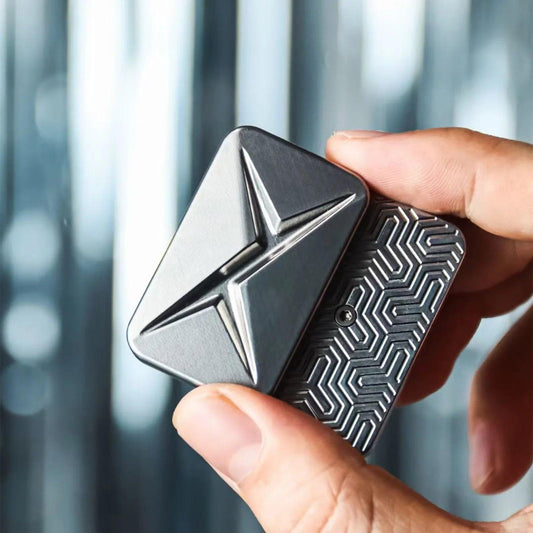
Fidgets help restless hands stay out of the way of restless minds. The best format for focus is the one that occupies your hands without drawing your eyes — which is why the haptic coin dominates for thinking tasks. The format most people get wrong is the spinner: too visual, too much going on, the eyes want to track it. The format that's a coin flip is the magnetic slider — one person finds the click helpful, the next finds it distracting.
What the Research Says
Two studies, both small, both informative. The first tested whether a fidget spinner improved attention in adults during a video task. It didn't, measurably. The second tested whether a silent fidget (a small object rolled in the hand) improved attention in children with ADHD during a memory task. It did, modestly.
Two takeaways. First, the format matters: a silent, hands-only fidget helps; a visual, hands-AND-eyes fidget doesn't, because the eyes compete with the brain for the same resource. Second, the population matters: fidgets help people who already struggle with attention (ADHD) more than people who don't.
Focus vs. Restless Hands
The fidget doesn't make you focus better. It keeps your hands out of the way of your focus. If your hands are fine at a desk, a fidget won't help much. If your hands click a pen or scroll a phone when you should be reading, a fidget redirects that energy into a low-interference channel.
This is why the format matters. The format you want is the one that occupies your hands and not your eyes. The format you don't want is the one that occupies both — and the spinner is the example. The bearing hum and the visual rotation pull your eyes away from the task.
The haptic coin meets this test. The magnetic slider, when not in use, also meets it. The trackless slider, when in use, fails it — the inner piece is in motion and the eyes want to track. The spinner fails it for the same reason.
Format-by-Format for Focus
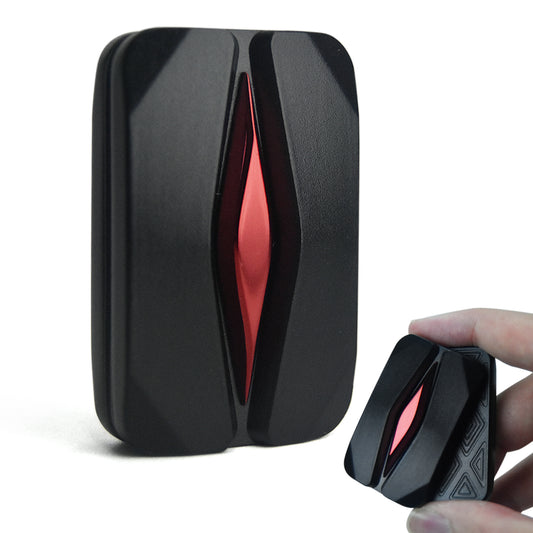
Haptic coin: Best for focus. Silent, hands-only, repeatable, the eyes stay on the task. The [haptic coin guide](https://komoedc.com/blogs/news/what-is-a-haptic-coin) explains why this format dominates.
Magnetic slider (medium or quiet click): Second best, with a caveat. The click is audible and competes with quiet tasks (reading, deep listening). For writing or office work, the slider is fine. For reading or math, the haptic coin is safer.
Spinner: Skip. The visual rotation is a focus pull, not a focus aid. The bearing hum is a sound pull in a quiet room. Spinner is the format sold most as a focus tool and works the least.
Trackless slider: Skip. The inner piece in motion is a focus pull. The trackless is a performance toy, not a focus toy.
The Desk Setup
Three things that matter.
Pick one fidget, not two. Two fidgets create a decision moment every reach — which to pick up. The decision is small but real, and the decision is the focus drain. One fidget is the better setup.
Keep it where your dominant hand goes. Right side for right-handed users, near the mouse. Distance to reach it should be near-zero.
Use it for the boring part. A fidget is most useful for low-attention stretches (the second paragraph, the middle of a long document) and least useful for high-attention stretches (the headline, the math). Reach for it when the task is dull. Put it down when the task is sharp.
Office vs. Home
Office: Haptic coin is the default — silent, hands-only, doesn't disturb anyone. The magnetic slider is borderline; test it at home first. The spinner is a no for the open plan.
Home: Haptic coin or magnetic slider, whichever you prefer. The spinner is also fine in a private space.
On calls: Haptic coin only. The magnetic slider's click may be picked up by the microphone, and the spinner is too visual on video.
For Kids with ADHD
If you're buying for a child with attention issues, the format choice matters more than the brand.
Format: Haptic coin or soft fidget (squishy, plastic). The spinner is too visual. The magnetic slider is fine for older kids but the click is a stimulus, not a focus aid. The trackless is too performance-toy.
Rules: Use the fidget for the boring part of homework. Pick it up when the task is dull. Put it down when the task is engaging.
Safety: Keep strong-magnet fidgets away from young children — small parts and magnets are a hazard if swallowed. For kids under 10, plastic spinners or soft fidgets are safest. For kids 10+, a solid metal haptic coin is fine.
For a formal diagnosis, talk to a clinician before relying on a fidget as a focus tool. It helps, but it's not a substitute for medication, behavioral therapy, or classroom accommodations.
The Honest Take
If you're an adult without an attention issue, the fidget is a small help — better than tapping a pen, worse than a real break. Use it for the dull stretches. Don't expect it to replace sleep or exercise.
If you're an adult with ADHD, the fidget is a useful tool — keeps the hands out of the way during dull stretches. Pick a haptic coin (silent) or a quiet magnetic slider. Don't use it during high-attention stretches.
If you're buying for a child, the format choice matters more than the brand. Haptic coin or soft fidget for younger kids. Magnetic slider for older kids. Keep strong-magnet fidgets away from young children.
FAQ
Do fidget toys help with focus?
Sometimes. They help when the format is silent and hands-only, and the task is a low-attention stretch. They hurt when the format is visual or the task is a high-attention stretch.
What is the best fidget toy for focus?
The haptic coin. Silent, hands-only, doesn't pull the eyes. For variety, a quiet magnetic slider is the second pick.
Are fidget spinners good for focus?
Usually not. The visual rotation and bearing hum compete with the task for attention.
What about for ADHD adults?
A haptic coin or a quiet magnetic slider is best. Helps during dull stretches. For sharp stretches, the fidget is a distraction. Not a substitute for the other supports that work.
Pick the Format That Fits the Task
The honest take: fidgets help some people, hurt others, and the difference is the format and the task. For most adults at a desk, the haptic coin is the safest pick — silent, hands-only. For variety, a quiet magnetic slider is the second pick. The [haptic coin guide](https://komoedc.com/blogs/news/what-is-a-haptic-coin) has the full breakdown, and the [KOMO EDC best-sellers shelf](https://komoedc.com/collections/avada-best-sellers) shows the focus-friendly formats side by side.