Fidget Toys for Travel and Commuting: What Actually Works
The right fidget for travel depends on the setting. In shared spaces, many people prefer a compact design with contained movement and a lower sound profile. A spinner or trackless slider may need more room or attention, so consider where you will use it. This guide compares common formats by travel situation.
The Short Version
For travel, many people consider a haptic coin or magnetic slider because both formats can be compact and used with one hand. Choose based on sound, size, and whether the moving parts stay contained. Spinners and trackless sliders may need more room or attention, depending on the design.
What Travel Really Changes
A fidget that works at the office doesn't automatically work on a plane. The environment is different, and the rules are tighter. Three constraints matter most.
Sound is shared. A plane is small and quiet. A loud click is heard by your seatmate. A medium click is heard two rows back. A spinner bearing hum travels surprisingly far in a quiet cabin. The threshold for "too loud" drops on a plane.
Motion is shared. A spinner in motion is visible to anyone in your row. A trackless slider balanced on edge is a visual performance. In a coffee line, a hotel lobby, or a train car, the visual competes with the room. The threshold for "too visual" drops when you're sharing the space.
Movement can be unpredictable. A plane or train can make any small object harder to control. If you expect a crowded seat or frequent movement, a compact design with securely contained moving parts may be easier to manage.
For shared travel, many people may prefer a haptic coin or magnetic slider because the format can be compact and used with one hand. A spinner or trackless slider may need more room or attention, depending on the design.
Format by Travel Situation
Different trips favor different formats. Match the fidget to the situation, not the other way around.
Long-haul flight (4+ hours): Haptic coin is the default. It's silent, fits in the hand, and works one-handed. The weight is a comfort object under stress. For variety, a quiet magnetic slider works as a second fidget, but the haptic coin should be the one you reach for most.
Short flight (under 4 hours): Magnetic slider is fine. The click is the same as a coffee shop, and the flight is short enough that the seatmate won't have time to get annoyed. A haptic coin still works but is less satisfying for the click-curious.
Airport / train station: Magnetic slider or haptic coin. Spinner and trackless are too visual for the crowd. If you wait at the gate, the slider is the one-handed fidget that doesn't draw eyes.
On the train / subway: Magnetic slider for one-handed use while standing. Haptic coin if seated. Skip trackless (turbulence risk) and spinners (visual).
Hotel room / Airbnb: Anything you like. The room is yours. This is where the spinner or trackless earns its keep — bigger sounds, more motion, no seatmate considerations.
Commute (driving): Skip the fidget. A fidget behind the wheel is a distraction. A spinner in particular is too visual for traffic. If you need something for the passenger seat, haptic coin is the only format that won't pull your eyes. (Don't fidget while driving.)
What to Pack
Three things, in priority order.
One haptic coin. The default. Discreet, quiet, works in any setting. Carries in a pocket, a small EDC pouch, or a carry-on. Security-screening procedures can vary, so check current TSA guidance and follow instructions at the checkpoint.
One magnetic slider (optional). If you want variety, add a magnetic slider. The click is a different fidget than the haptic coin's silent shift. Together, they cover most of what a fidget does without being redundant.
A small felt pouch (optional). A small felt pouch protects the finish from keys and coins in a carry-on. Most makers sell a 3x3 inch pouch for a few dollars. The pouch also makes the fidget easier to find in a backpack pocket.
Skip the spinner and the trackless for travel. Save them for home.
TSA, Airports, and Metal Detectors
Three things to know.
Screening can vary. Small metal items may be inspected or need to be removed from your bag. Pack the fidget in your carry-on and be prepared to follow the officer's instructions. Check current TSA guidance before flying.
Do not rely on a general assumption about airport screening. Pack the item as a small metal object and follow the checkpoint staff's instructions. Check current airport and TSA guidance before travel.
Don't put it in checked luggage if you can avoid it. Checked bags get thrown around. A solid metal fidget can survive, but a slider with a captured magnet that's been knocked around is more likely to develop a tolerance issue. Carry it on.
Format-by-Format Travel Verdict
One line each. The format you want for travel and the format you want at home aren't always the same.
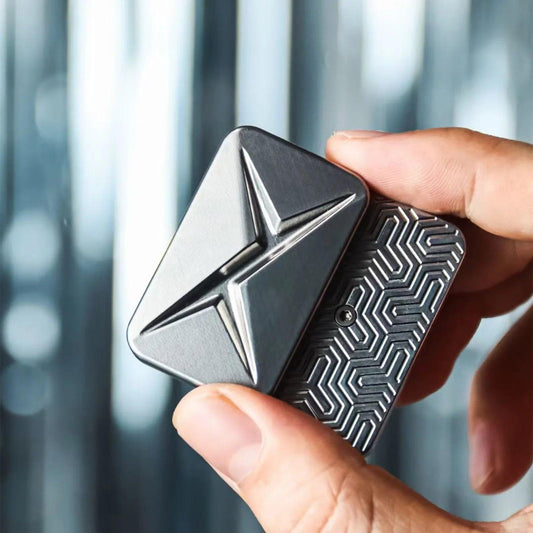
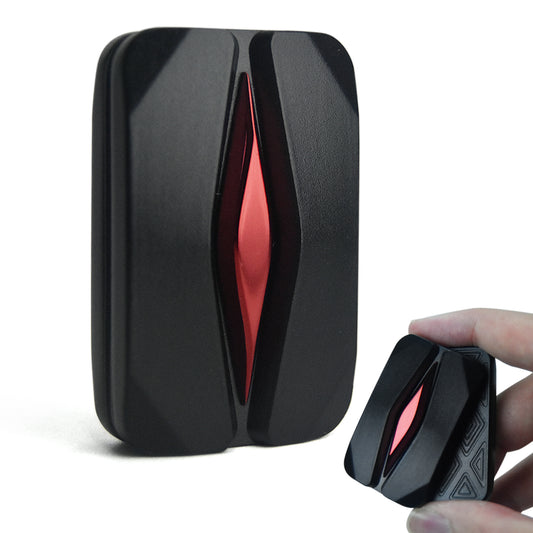
Haptic coin: A compact option to consider for travel. Its low-profile form may be convenient in shared spaces. The haptic coin guide has the full breakdown.
Magnetic slider: Strong second. The click is the same as a coffee shop. One-handed. Watch for turbulence on smaller frames; the inner piece can wobble. The magnetic sliders guide covers the mechanism.
Metal spinner: Skip for shared spaces. The visual is too much. Bring it for a hotel room if you want a third fidget option.
Trackless slider: Consider the available space and how securely the moving piece stays contained. Its tricks may require more focus or a flat surface than a plane seat provides.
Plastic spinner: Skip. The plastic rattle is worse than a metal slider's click, and the bearing hum travels further than you'd think.
For most travel, one haptic coin and one magnetic slider covers it. If you only carry one, choose the format that best fits the sound, size, and movement constraints of your trip.
How the Airplane Setting Changes the Click
A magnetic slider that clicks at a coffee shop is louder on a plane. Two reasons.
First, a plane is acoustically small. The walls are close, the seats are fabric (sound-absorbing but not sound-deadening), and the cabin noise is the steady drone of the engines, which is mostly low-frequency. A click in the cabin is in the same frequency range as the cabin noise, and your ear tunes into the click because the click is closer.
Second, your seatmate has nothing else to listen to. In a coffee shop, the click is one of many sounds. On a plane, with the engines, the air conditioning, and the soft conversation of other passengers, a click is the loudest thing in your row for a moment.
The practical effect: a click that's "fine" in a coffee shop may be too loud on a plane. The haptic coin doesn't have this problem because it doesn't click.
What About for Kids?
Travel fidgets for kids are a different category. Keep strong-magnet fidgets away from young children — small parts and magnets are a hazard if swallowed. For older kids (10+), a plastic spinner is fine; a metal haptic coin is fine; a magnetic slider is fine if the magnets are captured. For younger kids, the safe options are plastic spinners, plastic sliders, and the soft-edge fidget types designed for the age range.
Practical Travel Tips
Three things that aren't about the format but matter.
Don't carry it in the same pocket as your phone. A magnetic slider can interfere with a phone's magnetic case or with hotel key cards. Keep the fidget in a different pocket, ideally a front pocket, and the phone in its own pocket.
Wipe it down after the trip. Plane air is dry, hotel rooms are dry, and the fidget picks up whatever's in your carry-on. A microfiber cloth and 30 seconds after you get home resets the finish.
Don't lend it on a flight. A seatmate who notices your fidget and asks to try it has just become your problem for the rest of the flight. The polite answer is "I'm using it right now." The honest answer is "I don't lend it."
A Quick Note on Safety
The rules for travel are mostly common sense. Keep strong-magnet fidgets away from young children in the family — if you're traveling with kids, the fidget goes in your carry-on, not in a shared bag. Don't store a magnetic fidget in the same pocket as credit cards, hotel key cards, or phones with magnetic cases. Don't fidget while driving. The fidget is a tool, not a toy; treat it the way you'd treat a pen or a knife.
FAQ
What fidget toy is best for travel?
A haptic coin is one compact option for shared travel, while a magnetic slider offers a different one-handed motion. Compare sound, size, and how securely moving parts stay contained before choosing.
Can I bring a fidget toy on a plane?
Rules can vary by airport and screening situation. Check current TSA guidance, pack small metal items in your carry-on, and follow checkpoint instructions. If the item has magnets or moving parts, protect it from rough handling.
What's the quietest fidget for a flight?
A haptic coin — no click, no sound, no motion. A quiet magnetic slider is the next best, but the click is audible to a seatmate in a quiet cabin. Test the click on the way to the gate to set your threshold before you sit down.
Are fidget toys allowed in airport security?
Screening decisions can vary. Pack the item in your carry-on and be prepared to remove it or answer questions if requested. Check current TSA guidance before flying.
Should I bring a spinner on a flight?
Probably not. The bearing hum and the visual are too much for a shared cabin. Save the spinner for a hotel room or your home desk.
Pack the Right One
For most travelers, the right setup is a haptic coin in one pocket and a magnetic slider in another — covers quiet moments and click moments without redundancy. The haptic coin guide and the magnetic sliders guide have the full breakdown of each format. The Featured Metal Fidget Toys collection shows the travel-friendly formats side by side, and the Gold Ace is one example of a mid-range magnetic slider for travel.