EDC Fidget Toys Explained: What "EDC" Means and Why It Matters
If you've typed "edc fidget toy" into Google and felt a little lost, you're not alone. EDC is a whole category — knives, watches, flashlights, lighters, pry bars — and fidget toys are one of its fastest-growing corners. This guide explains what EDC means, where fidgets fit in, and how to buy one worth carrying instead of one that ends up in a drawer.
What "EDC" Means, in Plain English
EDC stands for **everyday carry**. The phrase describes the small set of objects a person carries every day — typically a knife or multi-tool, a watch, a wallet, a flashlight, a pen, keys, and a phone. The culture around EDC cares about three things: the object has to be useful, it has to be built well enough to survive daily carry, and it has to look intentional next to the rest of what's in your pocket.
The phrase started in knife and flashlight forums around 2010 and spread to a broader lifestyle by the late 2010s. By 2020, "EDC fidget" was a searchable term; by 2026, it's a recognized subcategory.
How Fidget Toys Entered the EDC Category
EDC has always been about objects that do something. Fidget toys entered when a new generation of metal fidgets started meeting the same build standards: solid metal, precise tolerances, finishes that hold up to daily carry, no plastic parts. The category marker is metal construction: a plastic spinner is a toy, a titanium spinner with sealed bearings is an EDC object. Same format, different category — the difference is the metal, weight, and finish.
The Rules That Define an EDC Fidget
Five rules separate an EDC fidget from a generic fidget toy. Most of these rules come straight out of the broader EDC community, not the fidget community, which is why they tend to favor metal and craftsmanship over plastic and novelty.
- Solid metal construction. Stainless steel, brass, copper, titanium, or zirconium alloy. No plastic body, no plated zinc that chips in a week.
- Pocket-sized. It has to fit in a fifth pocket or a small EDC pouch without bulging. Anything over 100 grams stops being EDC and starts being desk-only.
- One-handed operation. You should be able to use it while holding a coffee, a phone, or a steering wheel. Two-handed fidget toys fall out of the EDC definition.
- Durable finish. Electroplated, hand-polished, stonewashed, or patina-friendly. Painted and coated finishes scratch the first week.
- No moving parts you can lose. Magnetic sliders have captured magnets. Spinners have sealed bearings. Haptic coins are sealed shut. If you can drop a small piece and lose it, it's not really EDC-grade.
The Four Main Types of EDC Fidget Toys
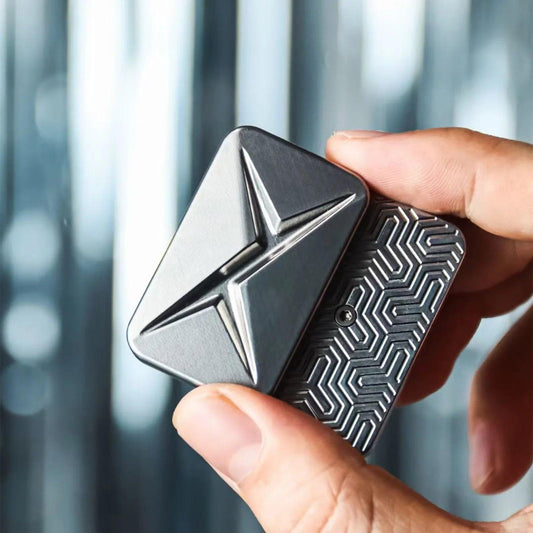
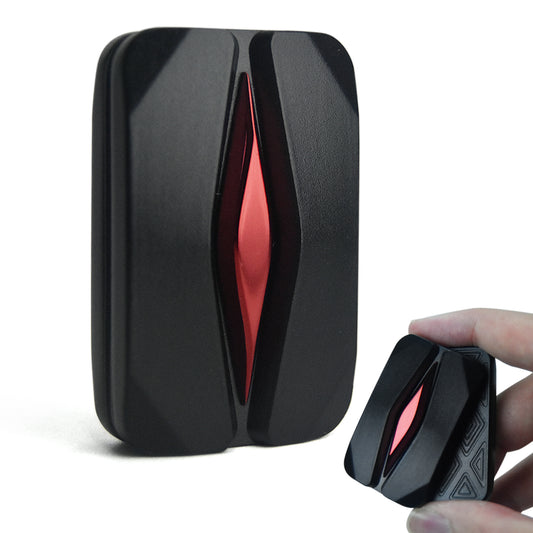
The category has settled into four formats, each with its own feel and sound. Magnetic sliders are the most common today — small metal frames with an inner piece that snaps home against neodymium magnets. They're the format the poker-card sliders use, and the default recommendation for first-time EDC buyers. (See the magnetic sliders guide for the full breakdown.) Trackless sliders drop the fixed rail — the inner piece is free to move, spin, and balance. Trick-toy style, good as a second buy. Metal spinners are the classic: two-, three-, or four-prong designs with sealed bearings, weight that feels like jewelry, long spin times. Haptic coins are the quiet option: a sealed metal disc with an internal weight that rolls as you move it. No click, no spin, no bearing — just metal in the hand (see the haptic coin guide). Most adults who carry an EDC fidget end up with two: a magnetic slider for the click and a haptic coin for the quiet.
What "EDC Fidget" Gets Wrong
The phrase has been stretched to cover products that don't really belong in the category. A few red flags when you're shopping:
- "EDC fidget" made of plastic with a metal coating. The plating chips in a week and the toy falls apart. Real EDC fidget is solid metal.
- "EDC fidget" with a 200-gram weight. Too heavy for a pocket. EDC-grade tops out around 100 grams.
- "EDC fidget" marketed to kids. EDC is an adult category. Fidgets for kids are usually plastic for safety reasons; that's a different product line.
- "EDC fidget" with weak magnets or rattling parts. If you shake it and it sounds like a baby toy, it isn't EDC-grade.
How to Pick Your First EDC Fidget
Three steps narrow it down fast. Pick a format: magnetic slider is the safe default, haptic coin for quiet, trackless for tricks, metal spinner for motion. Pick a metal: stainless is the everyday choice (durable, balanced, no tarnish); brass and copper are heavier and develop patina; titanium is the lightest premium option. Pick a finish: electroplated hides scratches (best for daily carry), hand-polished develops character, stonewashed hides fingerprints, avoid painted. If you want a single recommendation: magnetic slider, stainless steel, electroplated, around 70 grams — like the Gold Ace poker slider.
Why EDC Fidget Toys Are Worth the Price
A real EDC fidget costs more than a plastic one — usually $30 to $80, sometimes higher for titanium. The price gets you four things that cheap plastic fidgets don't have: a finish that holds up to keys and coins, a magnet or bearing mechanism that doesn't wear out, a weight that feels intentional in the hand, and a build that doesn't rattle when you shake it. The cheaper plastic version feels like a toy in the first ten seconds; the metal version still feels right five years later.
FAQ
What does EDC stand for in fidget toys?
Everyday carry — the same phrase used for knives, watches, and flashlights. An EDC fidget meets those standards: solid metal, pocket-sized, one-handed, durable finish.
What's the difference between an EDC fidget and a regular fidget toy?
Materials and build. EDC fidgets are solid metal with precise tolerances and finishes that hold up to years of carry. Regular fidget toys are usually plastic and meant for short-term use.
Are EDC fidget toys for men only?
No. EDC is unisex; the "for men" framing is marketing. The designs work for anyone who wants a quality pocket object.
What's the best first EDC fidget?
Magnetic slider, stainless steel, around 70 grams, electroplated finish. Quiet enough for an office, satisfying in the hand, small enough to forget you're carrying it.
Do I need more than one?
Most people end up with two within six months — a magnetic slider for active fidgeting and a haptic coin for quiet moments. Three is the upper limit; after that, you're collecting, not carrying.
Browse EDC Fidget Toys
The KOMO EDC best-sellers shelf is the easiest place to start — every product there meets the EDC-grade criteria. For a side-by-side comparison of the four main formats, the poker-card slider collection covers magnetic, and the haptic coin guide covers the quiet option.