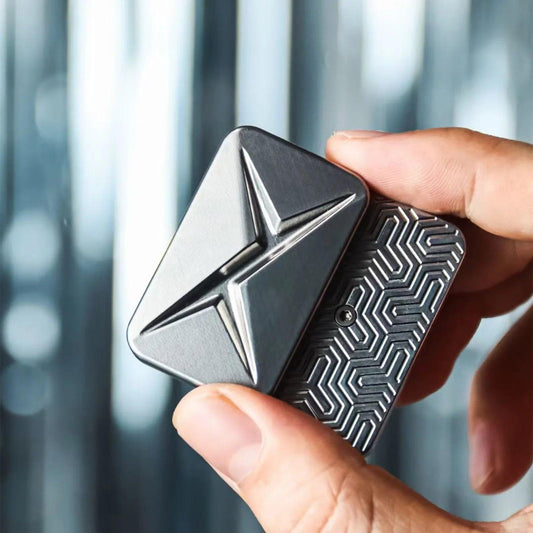
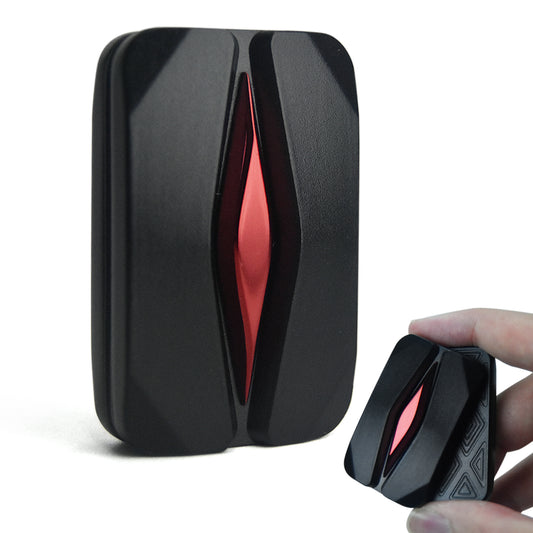
What Is a Haptic Coin? The Pocket-Sized Fidget Explained
A haptic coin is a small, palm-sized metal disc — usually a little thicker and heavier than a half-dollar — designed to be rolled, flipped, and shifted between your fingers. There's no click, no spin, no spring. The fidget comes from an internal weight shifting inside the housing. This guide covers what a haptic coin is, how it feels, who it's for, and how to spot a good one.
Haptic Coin, in One Sentence
A haptic coin is a sealed metal disc with a small internal weight or bearing. Roll it across your knuckles, flip it end over end, or shift it from finger to finger — the weight moves with gravity and momentum, and the feel of that movement is the fidget. No motor, no click, no app. Just metal in your hand.
Where the Name Comes From
The word haptic means 'related to the sense of touch.' A haptic coin is named for the tactile feedback as the internal weight moves — not for any sound or visual effect. A clicky slider is built around a magnetic snap; a haptic coin is the opposite: quieter, slower, and more meditative. A spinner has a free-spinning bearing you don't control; a haptic coin has no bearing at all — your hand controls every part of the motion.
How It Feels in the Hand
The first time you hold a haptic coin, the most surprising thing is the weight — usually 25 to 50 grams, heavier than a stack of three quarters. That weight is the fidget. Roll it across the back of your fingers and the internal weight rolls with you, then keeps going from inertia. Shift it from index to middle to ring finger and the weight lags a fraction of a second behind your hand — that tiny lag is the fidget. Flip it a few inches in the air; a well-made coin lands with a soft, dense thud, nothing like the bright ring of a steel ball bearing. Spin it on its edge and it won't spin for long — that's not the point — but the way it settles back down is satisfying in its own way.
Why Adults Pick a Haptic Coin Over a Clicky Slider
Three reasons come up again and again. It's quiet — no click, no snap, no spinning bearing hum; in a quiet open office a haptic coin makes less sound than turning a page, which is why the best-sellers shelf leans into it. It looks like a coin — it doesn't read as a toy on a video call or catch a coworker's eye passing by. It uses your hands, not a button — a clicky fidget can become a habit you press without thinking; a haptic coin demands attention, every roll a tiny coordinated movement that pulls your brain into your hands.
What to Look for in a Good One
Cheap haptic coins are plated zinc alloy with a loose steel ball inside — rattly, with a finish that wears in weeks. A good haptic coin is a different object.
- Material. Solid brass, copper, stainless steel, or titanium. The weight should feel like the metal, not the air inside it. Brass and copper warm to your hand quickly; stainless and titanium stay cool longer.
- Finish. Hand-polished, stonewashed, or electroplated. A high-quality electroplated finish hides minor scratches and keeps its look for years. Bare polished finishes look great on day one and develop patina over time, which most owners come to prefer.
- Internal weight. Look for designs where the weight is captive but rolls smoothly — no rattle, no stuck position, no clicking when you shake the coin. A sealed bearing or a single precision-machined weight is the marker of a well-made one.
- Size. Around 30–35 mm diameter and 8–12 mm thick fits the average adult hand. Smaller coins disappear between your fingers; larger ones stop feeling like a coin.
- Sound. Pick it up and shake it. If you hear loose parts clicking around, put it back. A proper haptic coin is essentially silent in motion and produces only a soft, dense thud on a hard surface.
Common Uses Beyond Fidgeting
A haptic coin often finds a second life as a decision coin, a worry stone with a real mechanism, an EDC object that fits a fifth pocket, or a conversation piece that gets asked about within ten seconds of being handled.
A Quick Note on Safety and Care
A haptic coin is solid metal with no small parts and no magnets. It is safe to carry loose in a pocket and safe to handle — including for older teens. That said, it is not designed as a toy for young children: the weight and edges mean a dropped coin on a bare foot still stings, and coins small enough to fidget with are small enough to swallow. Keep it away from young children and treat it as an adult desk object, not a kid's toy. To care for the finish, wipe it with a dry microfiber cloth every few weeks and avoid storing it next to keys or loose change where the surfaces can grind against each other.
FAQ
What is a haptic coin, exactly — is it a spinner?
No. A spinner uses a free-spinning bearing; a haptic coin does not. The motion in a haptic coin is gravity-driven and controlled by your hand the entire time. That is the difference.
Is a haptic coin the same as a fidget coin?
Essentially yes. "Fidget coin" is the broader category; "haptic coin" is the specific design language — solid metal, sealed, weighted, quiet. Most products marketed as fidget coins fit the haptic definition.
How loud is a haptic coin in a quiet office?
Quieter than a clicky slider and quieter than a spinner. The only sound is the soft thud if you set it down on a desk. In a normal office, no one will hear it. In a pin-drop quiet room, your closest neighbor might.
Can I use a real coin as a haptic coin?
No — a real coin has no internal weight and no movement. The fidget comes from the weight shifting inside the housing. That internal mechanism is what separates a haptic coin from a polished half-dollar.
Does a haptic coin help with focus?
Many adults who carry one say yes — it gives restless hands a quiet task and the brain tends to focus better when hands have a repetitive motion to do. This is a comfort-and-observation point, not a medical claim, and it works differently for different people.
Is a haptic coin a good gift?
Yes. It is small, well-presented, and lands well with people who already have a knife, watch, and wallet. Pair it with a small felt pouch and you have an EDC gift that fits in a stocking. If you want to bundle it with something clicky for contrast, the Gold Ace poker slider is the most common pairing.
Find One That Fits Your Hand
Browse the KOMO EDC best sellers to compare finishes, weights, and materials. Most adults who try one keep it in their pocket the same day it arrives — it is the rare fidget that gets quieter, not louder, the more you use it.