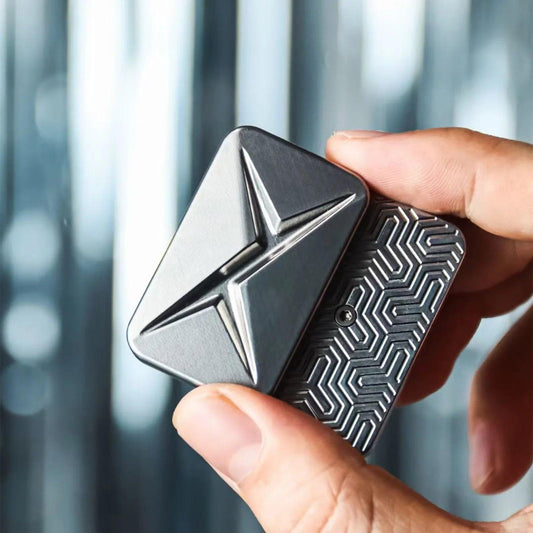
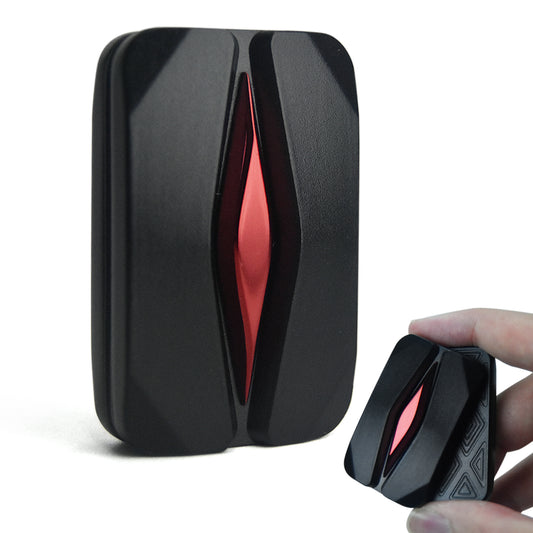
Brass vs Aluminum vs Titanium Fidget: Metal Showdown
Choosing the body metal changes the entire feel of a metal EDC fidget. The brass vs aluminum vs titanium fidget decision usually comes down to four things: weight in the hand, sound when the mechanism fires, how the surface ages over months of pocket carry, and what you're willing to pay. This guide walks through each metal with concrete numbers, then closes with a recommendation for adults who actually carry a fidget every day.
The Short Version
Brass is heavy, warm, and loud — it patinas fast and costs the least. Aluminum is light, cool to the touch, quiet, and the cheapest option per part. Titanium is light, neutral-warm, corrosion-proof, and the most expensive. If you want a desk fidget that feels substantial, brass wins. If you want a pocket fidget you forget you're carrying, aluminum wins. If you want corrosion-proof carry with a premium feel, titanium wins — at roughly 4–8x the brass price.
Brass vs Aluminum vs Titanium Fidget — Weight, Sound, and Feel
Weight is the single biggest difference between these three metals, and it's the first thing you notice when you pick up a metal EDC fidget. Brass sits around 8.5 g/cm³ — roughly 2.6x denser than aluminum at 2.7 g/cm³. Titanium comes in at 4.5 g/cm³, almost twice as heavy as aluminum but only about half as heavy as brass for the same shape. A brass slider that weighs 71 g in steel form would tip the scales closer to 95 g in brass, while the same shape in titanium would drop to roughly 55–60 g.
Sound follows weight. A heavier slider produces a deeper, more resonant click when the inner piece hits the stop. Brass-bodied magnetic sliders — like the electroplated steel Gold Ace poker slider on the heavier end of metal sliders — have a satisfying thud-clack that carries across a quiet office. Aluminum bodies sound thinner and higher-pitched. Titanium sits between the two but with a slightly more damped character.
Thermal feel is the underrated factor. Aluminum pulls heat away from your fingers quickly, so it feels cold in a chilly room. Brass warms up almost immediately to body temperature. Titanium lands between the two — cool at first touch, then warming faster than aluminum. If you fidget in cold offices or outdoor commutes, this matters more than the weight spec.
Brass: Heavy, Warm, Patinas
Brass is a copper-zinc alloy, typically 70% copper and 30% zinc for machined parts. The trade-off is straightforward: you get weight and warmth in exchange for ongoing maintenance. A bare brass body will develop a patina within weeks of pocket carry — skin oils, sweat, and pocket lint darken the surface unevenly. Some owners love the aged look; others polish it weekly with a brass cleaner.
Brass is also softer than steel. Expect micro-scratches on corners and edges after a few months of carry. For an adult who treats a fidget as a working tool rather than a display piece, the patina becomes character. For someone who wants a like-new finish long-term, brass is the wrong choice.
Price is brass's biggest advantage. Raw brass stock runs roughly 3–5x cheaper than titanium and 2–3x cheaper than most stainless options, so a brass-bodied fidget typically costs less than a steel equivalent of the same design.
Aluminum: Light, Cool, Disposable
Aluminum is the default metal for budget fidget sliders, and for good reason. At 2.7 g/cm³ it's the lightest structural metal you'll find in the EDC fidget category — about a third of brass's weight for the same part. An aluminum slider disappears in a front pocket. The flip side is that it feels lighter in the hand during a click, and the click itself sounds thinner and higher-pitched.
Aluminum doesn't patina the way brass does. It forms a thin oxide layer that protects the surface, so the finish stays stable for years. It does scratch — aluminum is softer than steel — but the scratches are usually less visible on anodized or matte finishes. Aluminum is the right pick if you want a quiet, low-mass fidget you can carry all day without noticing it.
The price is the lowest of the three metals, which is why aluminum dominates the budget end of the EDC fidget market. Brands like JUDIXY on Amazon sell several aluminum-bodied magnetic sliders in the same format range, useful for side-by-side comparison if you're deciding between an aluminum-body budget buy and a heavier metal upgrade.
Titanium: Light, Strong, Corrosion-Proof
Titanium is the premium pick for a reason. Grade 5 titanium (Ti-6Al-4V) has a strength-to-weight ratio that beats both brass and aluminum — it's as strong as many steels at roughly half the weight. It doesn't corrode in sweat, salt water, or humidity, so a titanium-bodied EDC fidget can sit in a sweaty pocket or a humid car without any finish damage.
The feel of titanium in the hand is warm without being heavy. A titanium slider has a denser, more grounded click than aluminum, but lacks the deep resonance of brass. The surface takes a fine bead blast or stonewash well, and small scratches blend into the texture rather than standing out.
The catch is price. Titanium machining is slow, the stock is expensive, and small-batch production drives costs up. A titanium-body fidget typically runs 4–8x the price of an equivalent brass part and 6–10x the price of an aluminum part. For an adult who wants a single carry-piece for years, that cost premium is justified. For someone still dialing in their preferred fidget format, it's overkill.
Which Metal Should You Pick?
Match the metal to how you actually carry. If your fidget lives on a desk more than in a pocket, brass gives you the weight and sound that desk fidgeters tend to prefer. If your fidget goes everywhere — pocket, jacket, bag — aluminum keeps the weight down and the noise tolerable for shared spaces. If you want a corrosion-proof, decades-long carry piece and you're willing to pay for it, titanium is the answer.
For most adults picking a first metal EDC fidget, the magnetic slider format in electroplated stainless steel — like the poker-card sliders in the poker-card magnetic slider collection — sits in the middle of all three metals: heavier than aluminum, lighter than brass, corrosion-resistant without titanium pricing. The 71 g weight lands in the range where most people can feel the click without it pulling on a pocket.
If you want a quieter carry option for shared offices or video calls, a trackless slider from the trackless slider collection removes the audible click entirely and lets the metal choice become purely about weight and finish.
FAQ
Does brass make a fidget heavier than aluminum?
Yes — roughly 2.6x heavier for the same part. A brass slider that weighs 60 g would weigh about 23 g in aluminum.
Is titanium worth the price over brass for an EDC fidget?
Titanium is worth it if you carry in humid, sweaty, or saltwater environments, or if you want a decades-long carry piece. For a desk-only fidget, brass gives you 70% of the feel at 15–25% of the price.