Best Fidget Toys Under $30 (2026 Buyer's Guide)
The best fidget toys under $30 in 2026 aren't the plastic spinners from a decade ago. The category has matured into metal everyday-carry formats — magnetic poker-card sliders, mechanical "ding" sliders, trackless trick pieces, and 2-in-1 hybrids — and most of the worthwhile ones sit comfortably below the $30 line. This guide compares the formats that actually hold up, names the trade-offs nobody else talks about, and points you to the picks worth your money.
The Short Version
If you only read this paragraph: a magnetic poker-card slider is the safest format pick for adults who want one fidget that works at a desk, on a plane, and during focus work. If you already know you want something louder or more visual, the mechanical "ding" slider or a 2-in-1 hybrid is where to look. Skip pure bearing spinners for office use — the visual motion and bearing hum get noticed faster than any click.
Why the Best Fidget Toys Under $30 Are Mostly Metal Now
Two things changed. First, neodymium-magnet sliders became cheap enough to produce in steel and alloy bodies under $30, where five years ago a metal magnetic slider was a $50+ item. Second, the audience shifted to adults — desk workers, travelers, people who fidget during long calls — and adult buyers reject plastic because plastic feels disposable in the hand. The result is a sub-$30 category now dominated by 60–80 gram metal pieces with real weight, real sound, and one-handed operation.
Format-by-Format: The Four That Matter
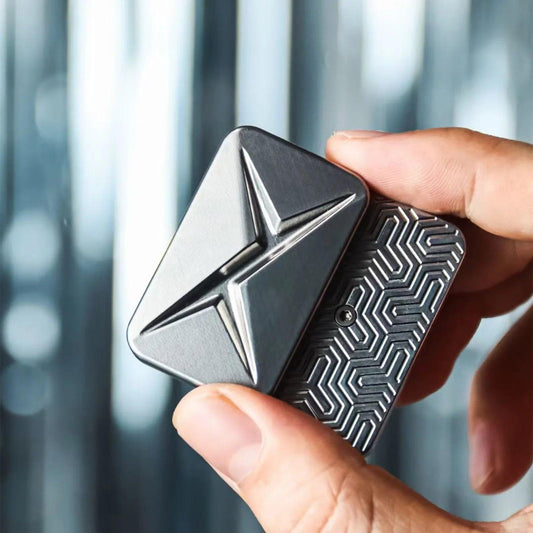
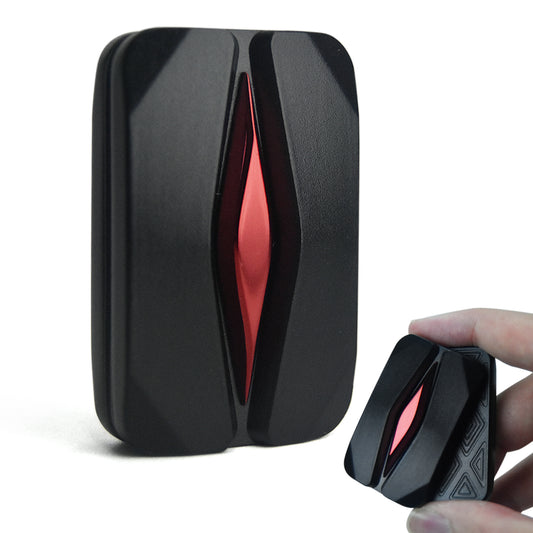
Magnetic poker-card slider. The format most adults should default to. A stainless steel body houses a captured neodymium magnet and an inner plate that snaps to a fixed stop with an audible click. The flagship KOMO EDC version — the Gold Ace poker-card slider — weighs 71 g and measures 1.77 × 1.34 × 0.39 inches. The click is audible in a coffee shop and to a next-desk coworker in a quiet office, but it doesn't carry through a room. The King of Hearts variant uses a red electroplate instead of black. Browse the full poker-card slider collection if you want the format at a glance.
Mechanical "ding" slider (animal-shaped). Not magnetic, not silent. A metal detent produces a lower-pitched "ding" when the inner piece hits the stop. The Premium Alloy body gives it a different sound profile from the magnetic slider — softer, rounder, more bell-like. People who find the magnetic click too sharp tend to prefer this. The trade-off: it's not silent, so it's not ideal for a bedroom or a library. See the ding-slider collection.
Trackless trick slider (Mountain). No fixed rail. The captured inner piece floats between two neodymium magnets and slides freely. This is the format for two-handed trick practice — flips, stalls, and rolls — not for one-handed desk fidgeting. It's also not office-friendly: the motion is too visible on a video call, and the format needs a flat clear surface to work. The Mountain is electroplated alloy.
2-in-1 hybrid (Vortex). One body, two mechanisms: silent rotation on one side, magnetic clicky slide on the other. Useful if you've genuinely gone back and forth between wanting a spinner and wanting a slider and don't want to carry two. The trade-off is depth in either mode — a dedicated spinner spins longer, a dedicated slider has a cleaner click. Browse 2-in-1 fidget toys if this format fits.
JUDIXY on Amazon also carries metal sliders in the same format range, useful for side-by-side comparison if you want to see what the broader market looks like at this price.
What Actually Matters When You're Picking
Three specs, in this order. Sound profile — magnetic click vs mechanical ding vs silent vs bearing hum. Match it to where you'll use it. Weight — anything under 50 g feels cheap in the hand and slides too easily on a desk; 60–80 g is the sweet spot for one-handed operation. Mechanism type — magnetic formats are louder but more tactile; mechanical formats have a different sound; trackless formats need two hands and clear space. Ignore bearing spin times, brand-name alloy claims, and any spec not tied to how the piece feels during a 30-second fidget at your desk.
Where Each Format Actually Works
Magnetic poker slider: office desk, airplane tray table, coffee shop, focus work, one-handed phone-scroll replacement. Skip for heavy turbulence (the inner piece can drift) and bedrooms next to a sleeping partner. Mechanical ding slider: anywhere you want a softer sound than the magnetic click — collectors' desks, a quieter home office. Skip for libraries and silent rooms. Trackless Mountain: home desk with space, two-handed play, video-free environment. Skip for office, calls, and travel. Spinner (Open Armor): home or private room, visual fidgeting, display piece. Skip for office and calls — the bearing hum is the giveaway. 2-in-1 Vortex: anywhere you genuinely want both modes and won't be annoyed by compromise in either.
FAQ
Are fidget toys under $30 actually worth it?
Yes, in metal. The $20–$30 range is where steel and alloy bodies become standard and the magnet mechanisms are well-made. Below $15, you mostly find plastic and weaker magnets. Above $30, you're paying for finish or brand, not function.
What age are these for?
Adults and teens. These pieces contain strong neodymium magnets and small parts — keep away from young children.
Which is quietest for an open office?
The trackless Mountain is silent during use, but it's not one-handed and not office-appropriate for other reasons. For one-handed office use, the magnetic poker slider at the lowest-effort click is the practical quietest option. No metal fidget is genuinely silent during active use.
Magnetic or mechanical slider — which should I buy?
Magnetic if you want a sharp, satisfying click and one-handed operation. Mechanical if you prefer a softer, lower-pitched sound and don't mind a slightly different feel in the hand.
Do these work on a plane?
The magnetic poker slider is the best travel format — small, one-handed, audible enough to feel without being disruptive. Skip trackless formats in turbulence; the inner piece can drift.
Where to Start
If you want one piece that covers the most situations, the Gold Ace magnetic poker-card slider is the default pick at 71 g, in electroplated stainless steel, with a click that reads as a tool rather than a toy. If you'd rather browse the full shelf first, the Featured Metal Fidget Toys collection shows what's actually moving. Match the format to the room you'll use it in, and the rest takes care of itself.