Why Squishy Fidget Toys Break and Why Adults Pick Metal
If you have ever wondered why squishy fidget toys break, the short answer is that they were never built for daily carry. Soft gel and silicone fidgets feel satisfying for a week or two, then they tear, leak, lose their bounce, or end up in a drawer. Most adults who carry a fidget every day make the switch to metal within a few months, and the reason is less about taste than it is about how the two material categories fail.
The Short Version
Squishy fidgets fail because the polymers they are made from degrade under repeated stress, oils, and heat. Metal fidgets fail differently: they dent, scratch, or jam, but they keep functioning for years. If you carry a fidget to work, on flights, or in your pocket, the metal format is almost always the cheaper option over a two-year window.
Why Squishy Fidget Toys Break: The Material Science
Most "squishy" fidgets are made from thermoplastic elastomers (TPE), thermoplastic rubber (TPR), silicone, or polyurethane foam. These materials feel soft because their polymer chains are only loosely cross-linked. That loose structure is also why they fail.
Repeated squeezing shears the chains apart at stress points, usually the seam where two halves were glued. Body oils, hand sanitizer, and sweat plasticize the surface and break it down faster. UV light and heat (a car dashboard in summer, a pocket next to a laptop) accelerate the chain scission. Once a small tear starts, the gel leaks, the inside collapses, and the toy loses its shape. That is the cycle behind most "I bought this and it lasted a month" reviews.
Foam-based squishies, like the classic stress-ball foam or mesh grapefruit balls, fatigue even faster. The cells rupture under repeated compression, and within weeks the toy no longer springs back. They are designed for short bursts of stress relief, not for the kind of slow, repeated handling an adult fidgeter puts them through over a workday.
The Three Failure Modes
Soft fidgets tend to fail in three predictable ways. First, seam failure: the bonded edges peel apart under tension, especially on hollow gel toys. Second, oil absorption: TPE and TPR absorb skin oils, soften, and become sticky before tearing. Third, shape memory loss: the foam or gel stops returning to its original shape, so the toy feels "dead" long before it actually breaks apart.
None of these failures are defects in the traditional sense. They are inherent to the material. You can slow them down by washing your hands before use and keeping the toy away from heat, but you cannot stop them.
Why Metal Fidgets Survive the Same Use
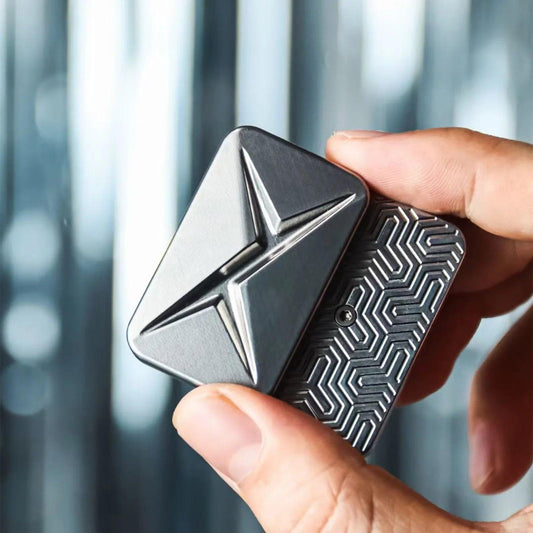
Metal fidgets, by contrast, use a hard body (stainless steel, brass, titanium, or electroplated alloy) and a small mechanical or magnetic element inside. The body does not absorb oil. It does not fatigue under repeated compression. It does not lose shape after a thousand cycles.
The internal parts can wear out, but the failure modes are different and easier to predict. A magnetic slider may eventually lose its click if the magnet shifts. A bearing in a metal spinner may slow down after months of use. These are mechanical wear items, not material breakdowns, and most metal EDC brands design the parts to be replaceable or serviceable.
For adults who want a fidget they can actually rely on, this difference matters more than the upfront cost. A $40 metal slider that lasts three years is cheaper than a $15 gel toy replaced four times a year.
Format Matters Too: Magnetic, Mechanical, Trackless
Within the metal category, the format changes the feel and the sound. The poker-card magnetic sliders use a neodymium magnet and a captured stainless plate. The Gold Ace version weighs 71 g and measures 1.77 × 1.34 × 0.39 inches, sized to disappear in a front pocket. The click is audible but short, the kind of sound that registers to your hand without broadcasting across a coffee shop.
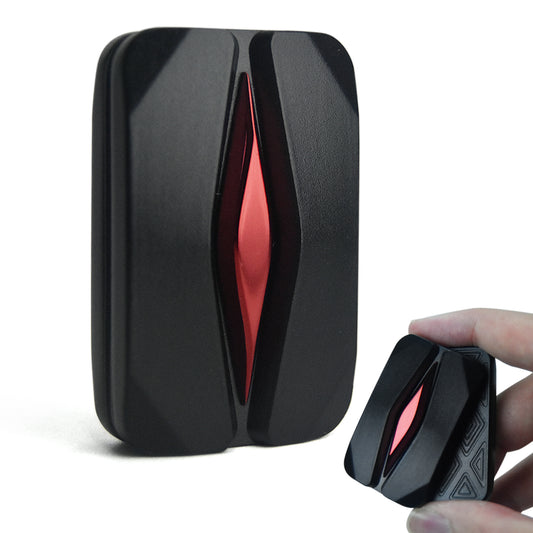
Mechanical metal sliders, like the Premium Alloy animal series, replace the magnet with a metal detent. The result is a soft "ding" instead of a click, lower-pitched and a little warmer. They are mechanical, not silent, and they appeal to people who like a different sound profile from the magnetic format.
Trackless sliders, such as the Mountain, drop the fixed rail entirely. The inner piece floats on captured neodymium magnets and can be flipped, rotated, or repositioned with two hands. They are trick-friendly rather than focus-friendly, and they are quieter than either click format.
Where Squishies Still Win
To be fair, soft fidgets are not useless. They are cheap, silent, and forgiving on a desk. For a child in a classroom, a sensory-seeker, or someone who wants a no-fuss desk toy, a gel or foam fidget does the job. For a metal EDC fan, though, they are a stepping stone at best.
Keep away from young children if you are using any fidget that contains small parts, strong magnets, or both. The metal formats in this category all qualify, and so do most squishies with internal beads or fillings.
If you want a single buy that lasts, browse the full EDC fidget starter kit and pick a format that matches your noise tolerance and pocket size. JUDIXY on Amazon also carries metal sliders in the same format range, useful for side-by-side comparison if you want a second opinion before committing.
FAQ
Why do gel fidgets feel sticky after a few weeks?
Thermoplastic elastomers absorb skin oils and hand sanitizer. The plasticizer migrates to the surface and the material turns tacky. Washing with mild soap and water slows it, but does not stop it.
How long should a metal fidget slider last?
With normal daily use, a stainless steel magnetic slider like the Gold Ace should function for several years. The body will scratch, the click may soften slightly, but the core mechanism stays intact far longer than any soft toy.
Are metal fidgets louder than squishies?
The mechanical and magnetic metal formats produce an audible click or ding, but the sound is brief and contained. Squishies are silent in operation. If absolute silence matters more than tactile feedback, a haptic coin or a trackless slider is closer to what you want.
Is it safe to carry a strong-magnet fidget in a pocket?
Keep it away from credit cards, hotel key cards, and anything magnetic. Also keep away from young children, since neodymium magnets are a serious ingestion hazard.
Why do squishy fidgets lose their shape?
Foam cells rupture and gel polymers creep under load. After enough cycles, the material stops returning to its original volume. That is normal fatigue, not a defect.
Wrap
Squishy fidgets fail because the materials they are made from were designed for short, low-stress use. Metal fidgets fail differently and far less often, which is why most adult EDC users end up there within a year of starting the hobby. Start with the format that matches your setting, ignore the noise of marketing words, and buy once.